“As folks struggled to make do and get by without the work that ailing or recuperating equines could no longer do, they unwittingly sparked other problems. If history teaches us anything, it is that one crisis soon begets others. As those of us who lived through the COVID pandemic know all too well, contagions, whether among humans or the animals we call our own, have the capacity to cause troubles that can go on to activate other calamities. In the early 1870s no less than in the present day, viruses and other scourges possessed the power to shunt individual and collective lives onto unexpected and often unwanted trajectories. The story of the Great Horse Flu thus offers an illustrative chapter in the ancient yet all-too-present dynamics by which humans, the creatures we hold closest, and the pathogens that circulate between us and them continually make and remake what we call history.”
The Great Horse Flu
An excerpt from the Introduction:
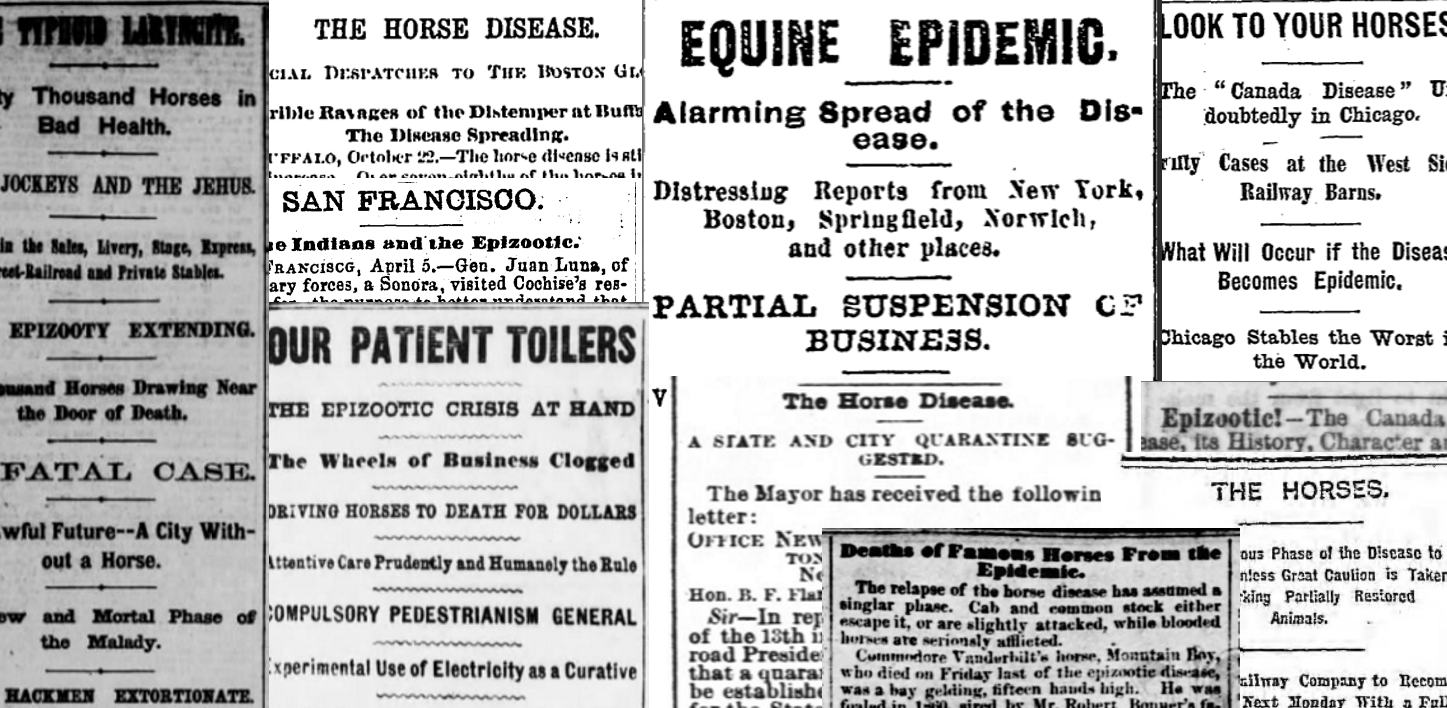

Recorded Cases
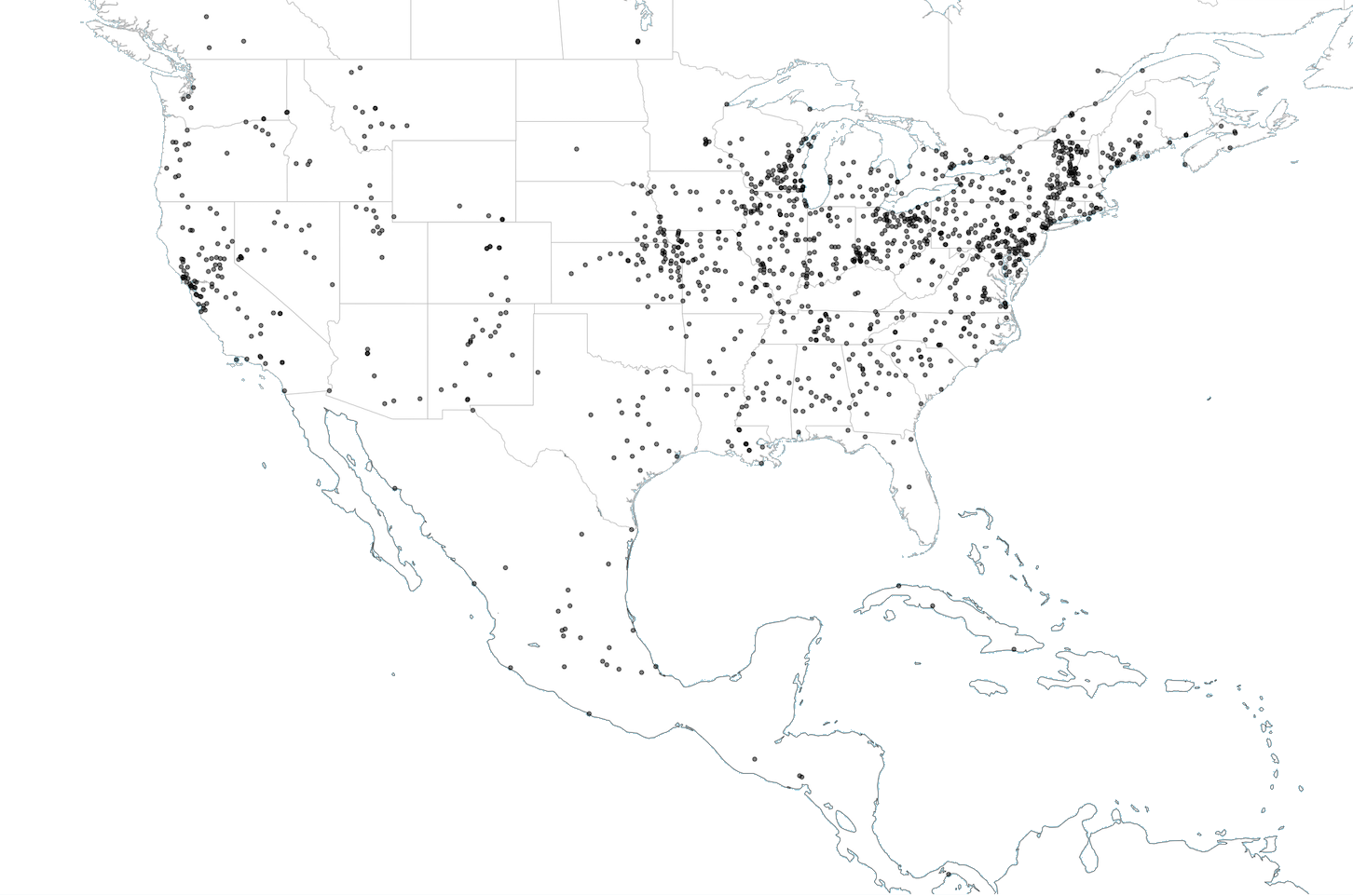
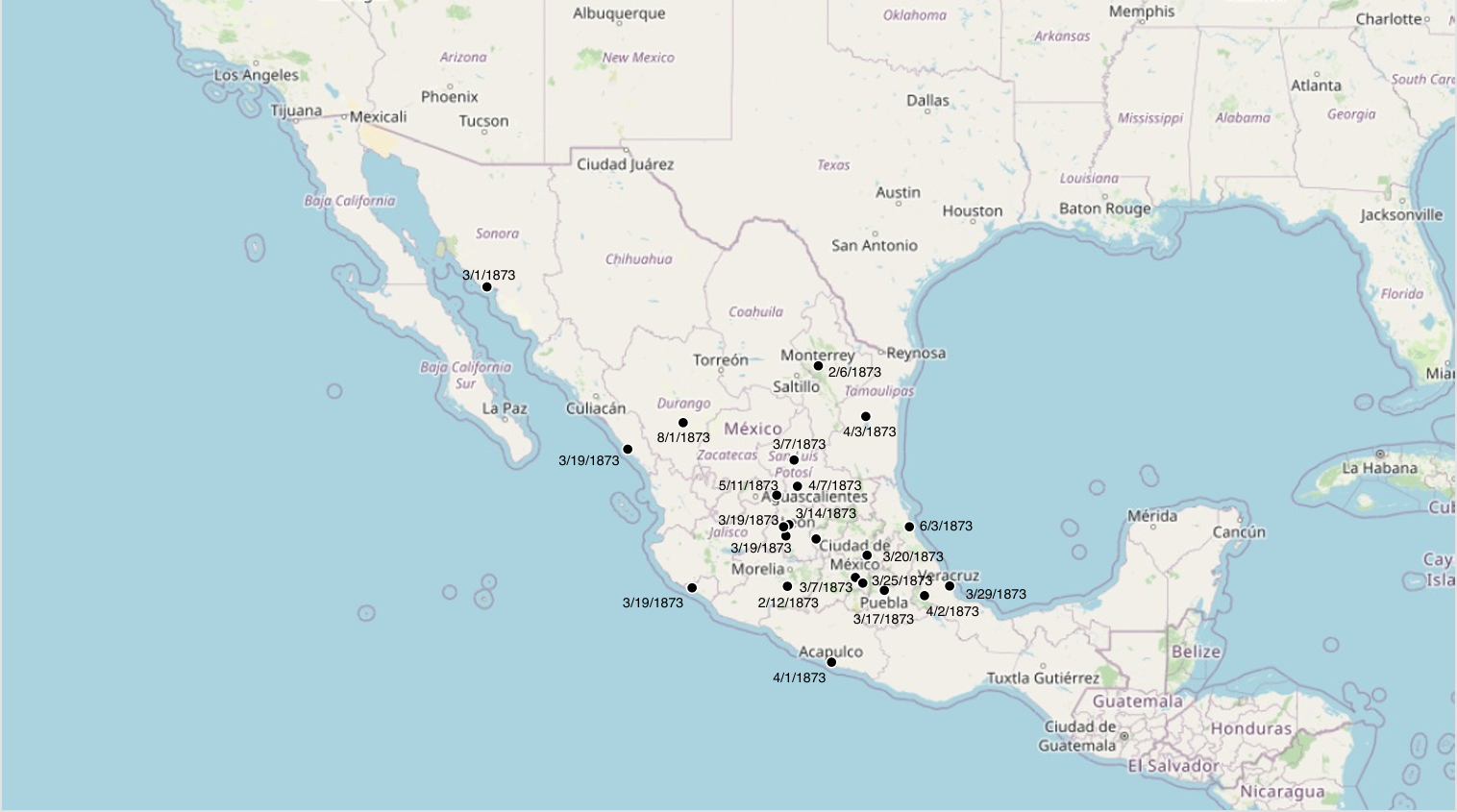
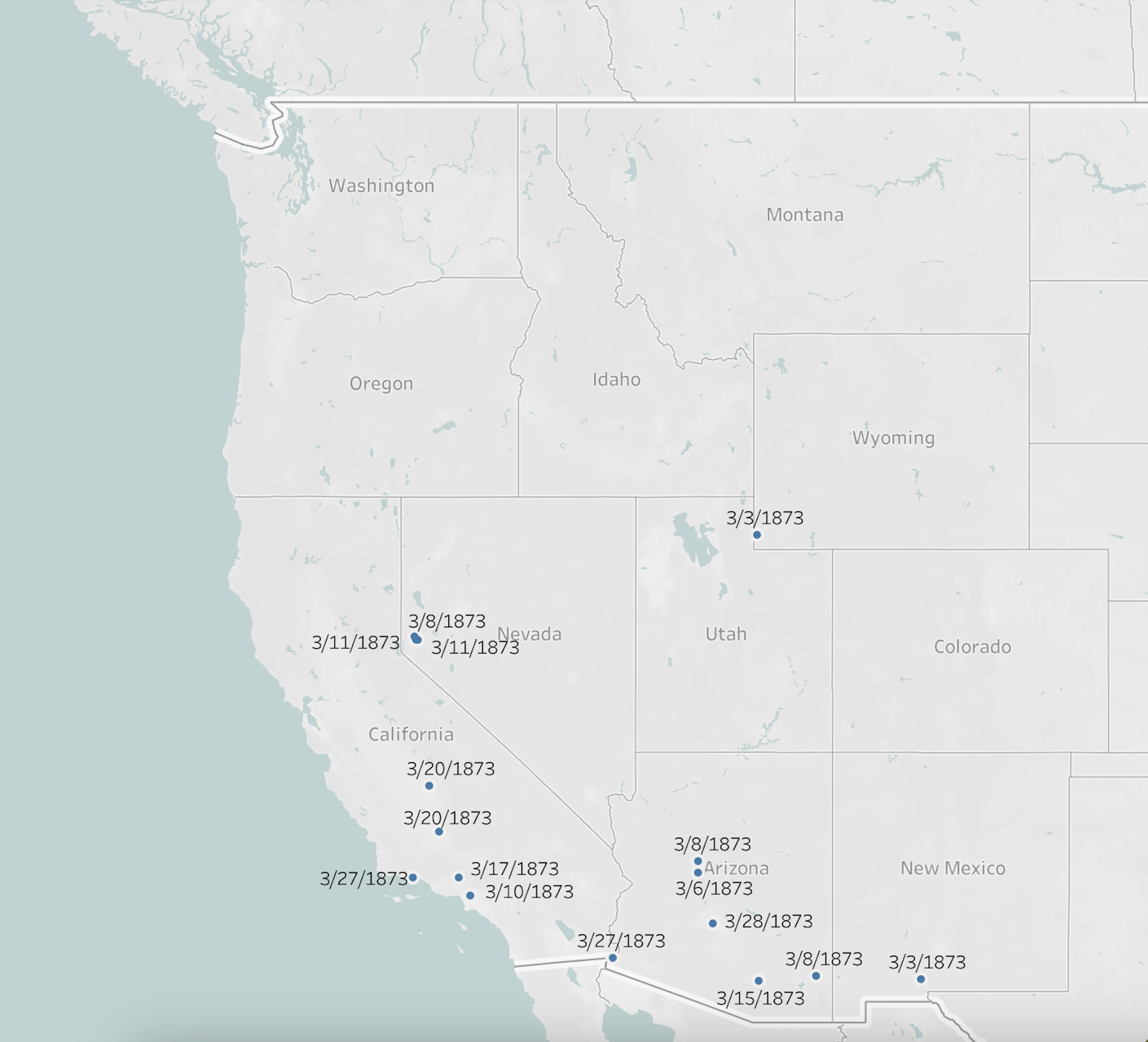
Map and data courtesy of Kerri Keller and Maggie McNulty.
Sept. 1872
Oct. 1872
Oct. 1872
Oct. 1872
SOUTHWEST
March 1873
Apr. 1873
Dec. 1872

Influenza A viruses are zoonotic and circulate among humans and several other animal species. Large-scale flu outbreaks can result when genomic material from strains adapted to two or more different host species infect the same cell and exchange genomic segments. Very occasionally, this process can produce a novel variant that spreads swiftly because the population it infects has little pre-existing immunity to it.
Together, three facts about the Great Horse Flu—1) sources record no epizootic of influenza anywhere else in the world in the early 1870s; 2) North American equine populations had long suffered from flu; and 3) influenza sickened well over ninety percent of horses, donkeys, and mules throughout North America and parts of the Caribbean and Central America in 1872-1873—strongly suggest that it resulted from the evolution of a novel viral variant in the locale where the outbreak first came to light: the market-farming countryside about a dozen miles inland from Toronto, Ontario.
Zoonotic Diseases
Flu Facts
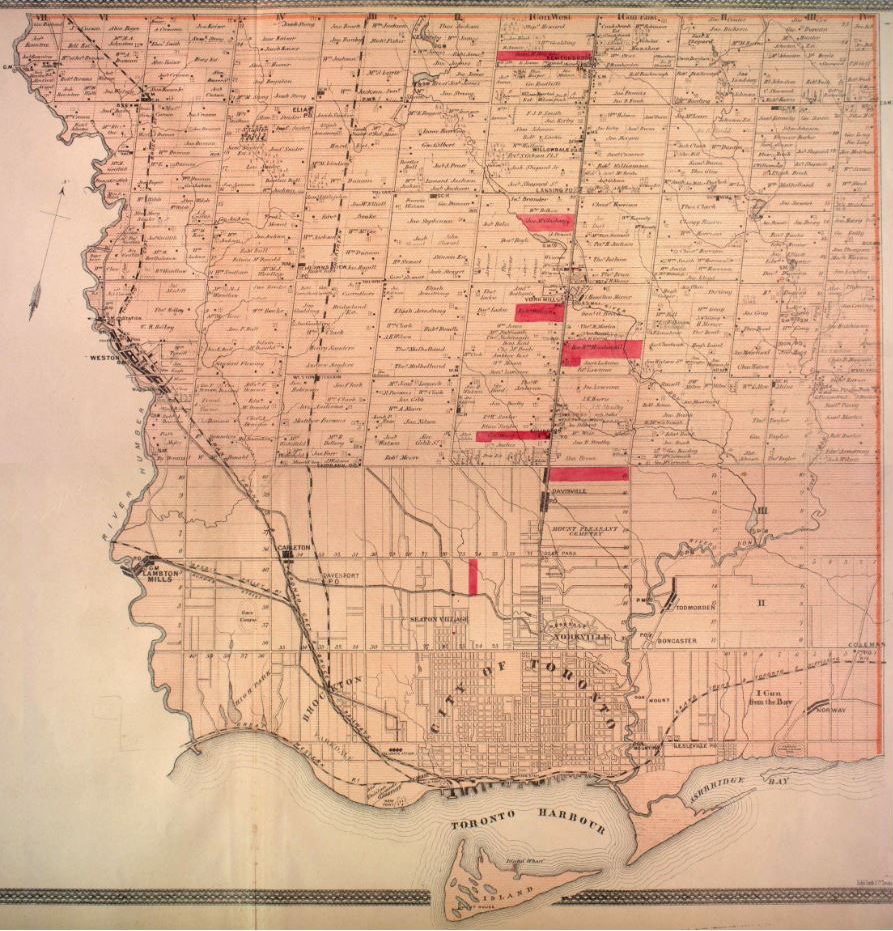
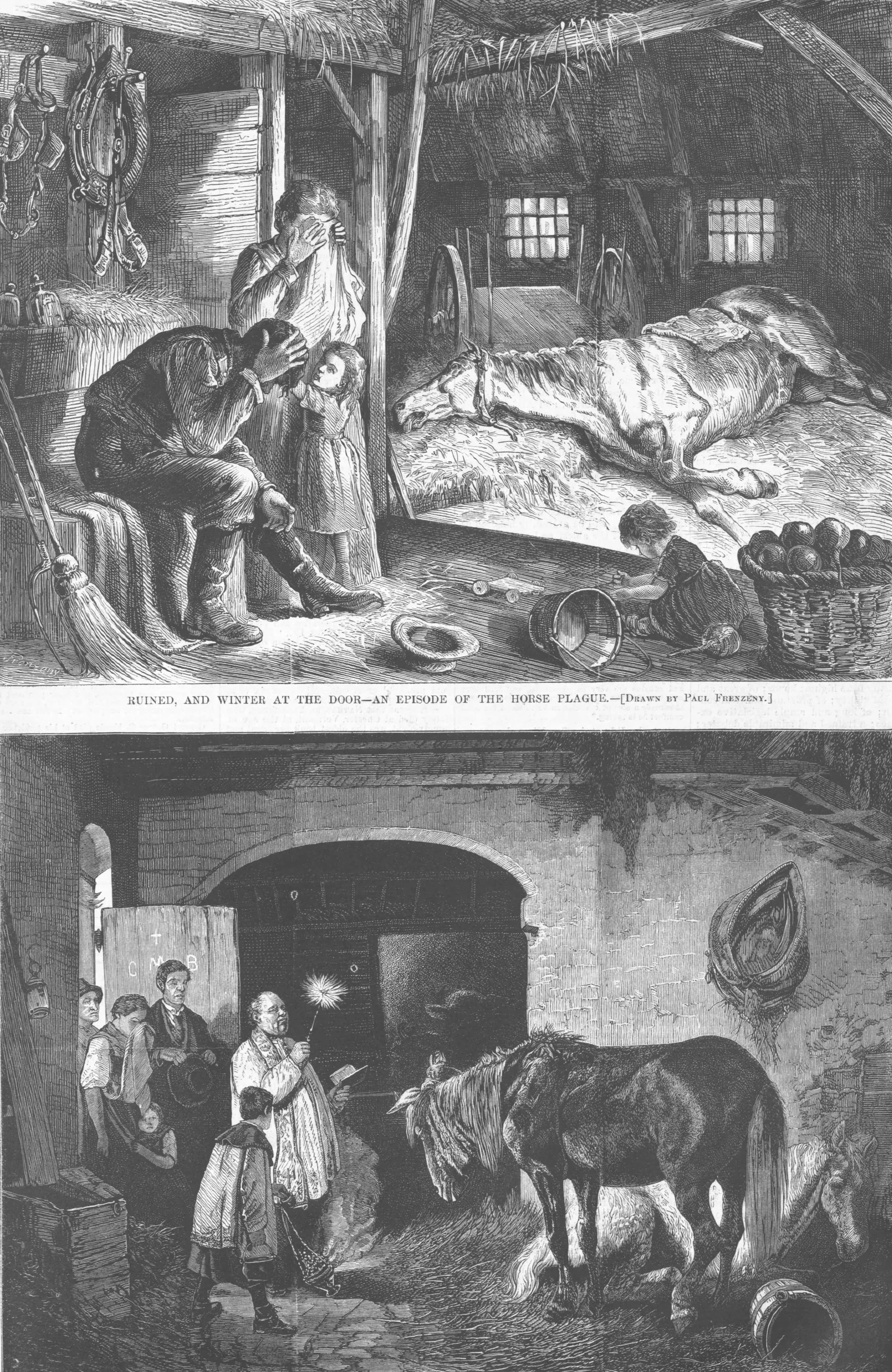
After the American Revolution, Anglo-American settlers rapidly displaced Native Americans and Indigenous landscapes in what is now Ontario. Newcomers overhunted local fauna and felled native forests to make way for mixed farms where they raised a variety of domesticated animals. As they changed the land and introduced horses, hogs, poultry, and other creatures, settlers unwittingly introduced a host of new influenza variants. Meanwhile, wild waterbirds—the primary reservoir for diverse flu variants—continued to inhabit the region’s flyways, waters, and lands. Suddenly, in an evolutionary event that occurred beyond the ken of human perception, two or more distinct strains of influenza formed a novel variant through a reassortment event that probably occurred about fifteen miles inland from the burgeoning provincial capital of Toronto, near the confluence of York, Markham, and Scarborough Townships. Although equines—horses, donkeys, and mules—in Ontario and other parts of the Americas had long suffered from flu infections, their immune systems could muster little or new defense against this new strain. The Great Horse Flu had been born. Horse-powered transportation systems and economic networks linked Ontario’s market-oriented farms to its biggest city, providing ideal pathways for the novel flu virus to reach Toronto. By early October, nearly every horse there had fallen ill. Soon, the Great Horse Flu was racing through the Canadian countryside. It took it just a few weeks to convulse Montreal, cross the U.S. border, and paralyze commerce and everyday life throughout widening swaths of eastern Canada and the U.S. Northeast.
Toronto
September 1872
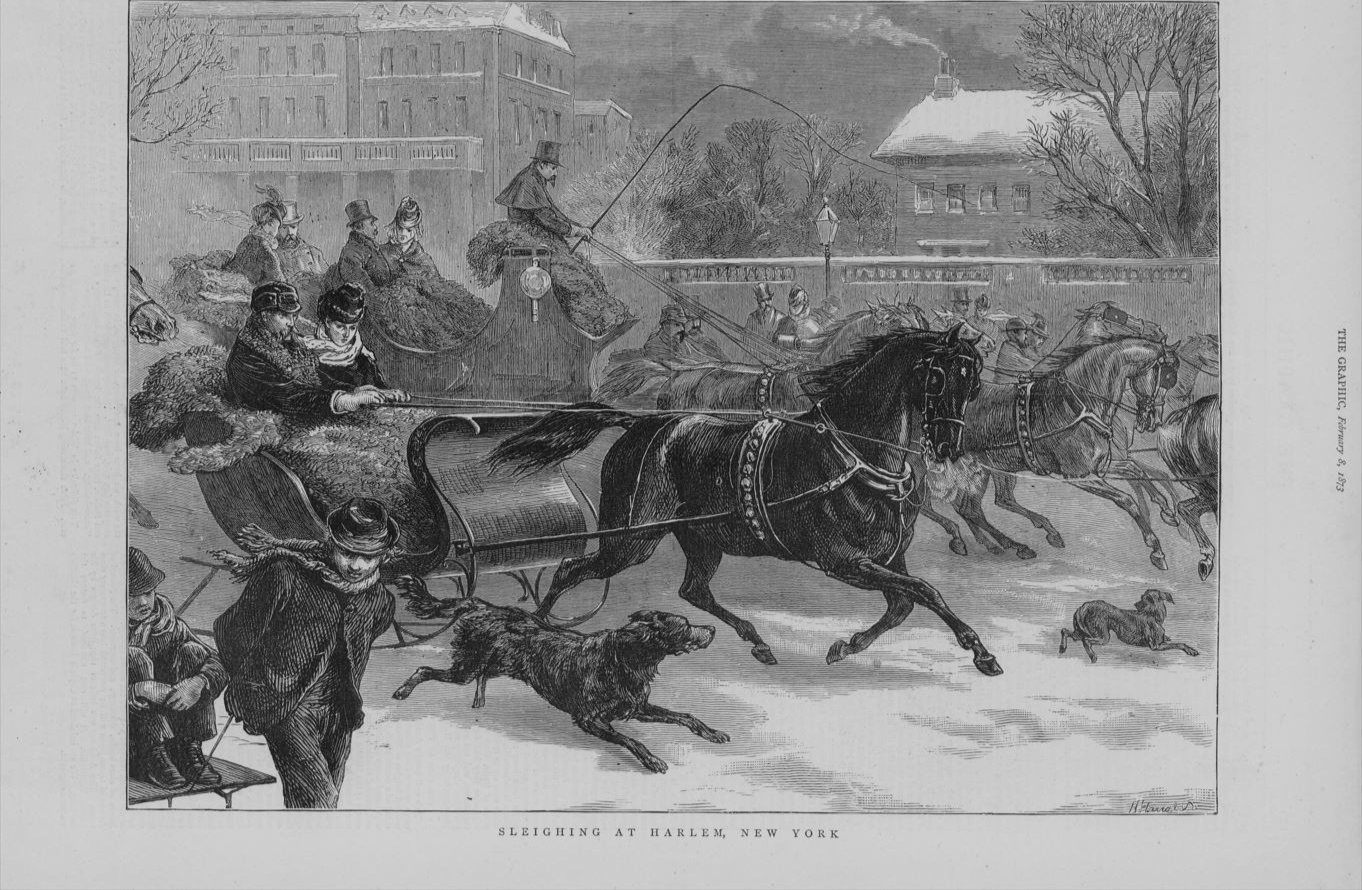
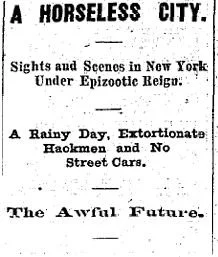
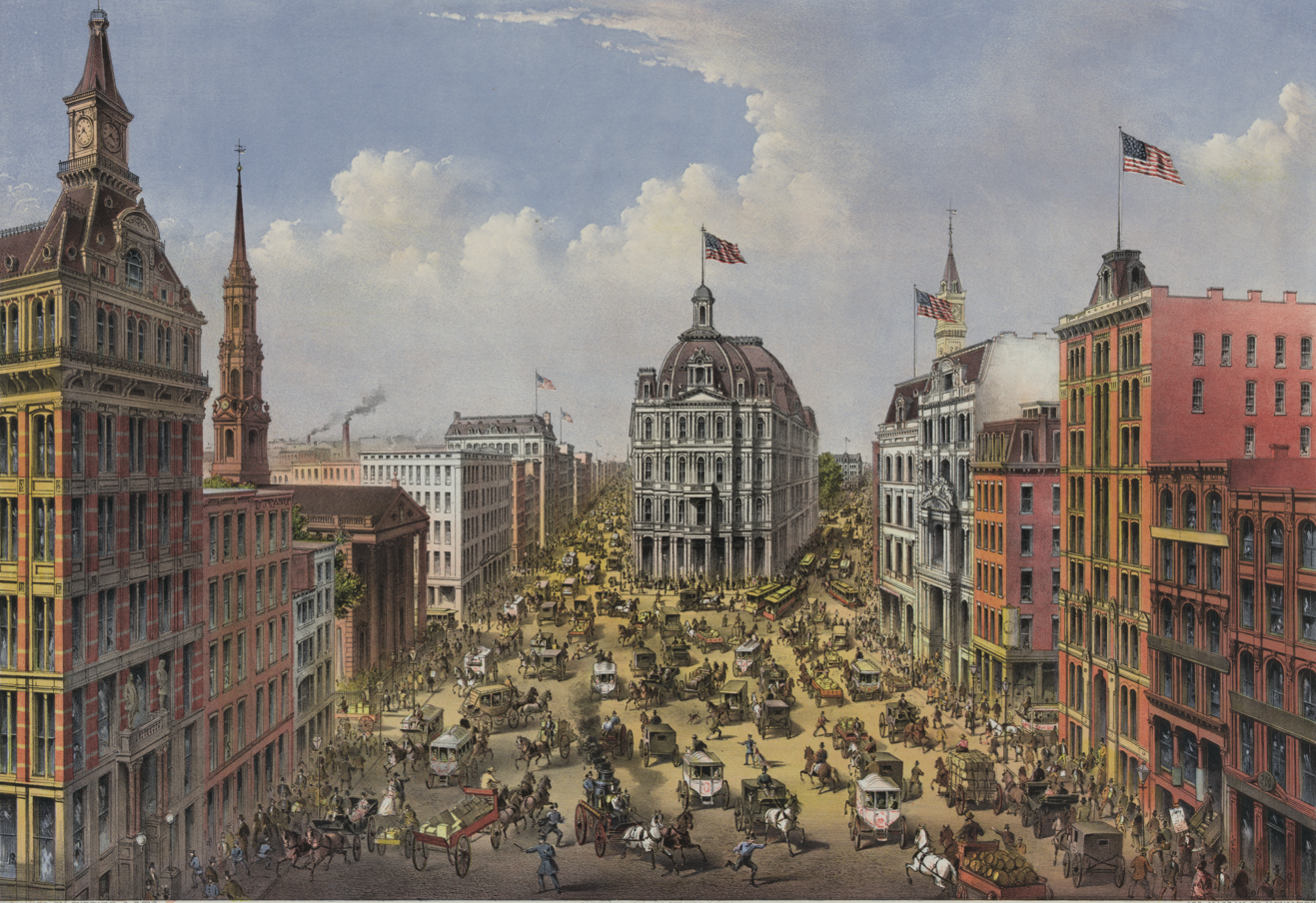
The Great Horse Flu forded the Niagara River around October 10. The outbreak—Canadians called it “the epizootic” but Americans often referred to it as the “Canadian horse disease”—would not strike Gotham for another ten days, but New Yorkers waited with growing dread as telegrams and reports of the disease’s crippling effects streamed in.
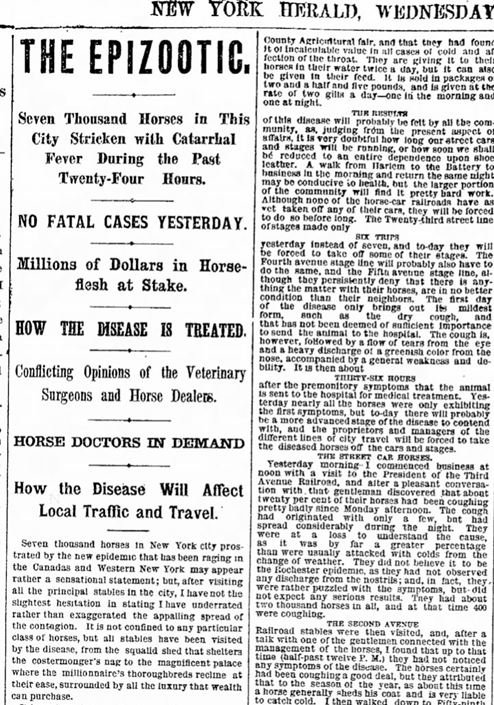
The epizootic found ample opportunity to infect new hosts after it reached the western hemisphere’s greatest metropolis. Teeming stables, bustling streets, shared water troughs, and the air itself all facilitated the outbreak’s speedy growth. In less than two weeks, upwards of ninety percent of horses, donkeys, and mules in New York and Brooklyn had fallen ill. Soon, scattered reports maintained that chickens, hogs, humans, and even the Central Park Zoo’s lions and tigers were also catching the flu.
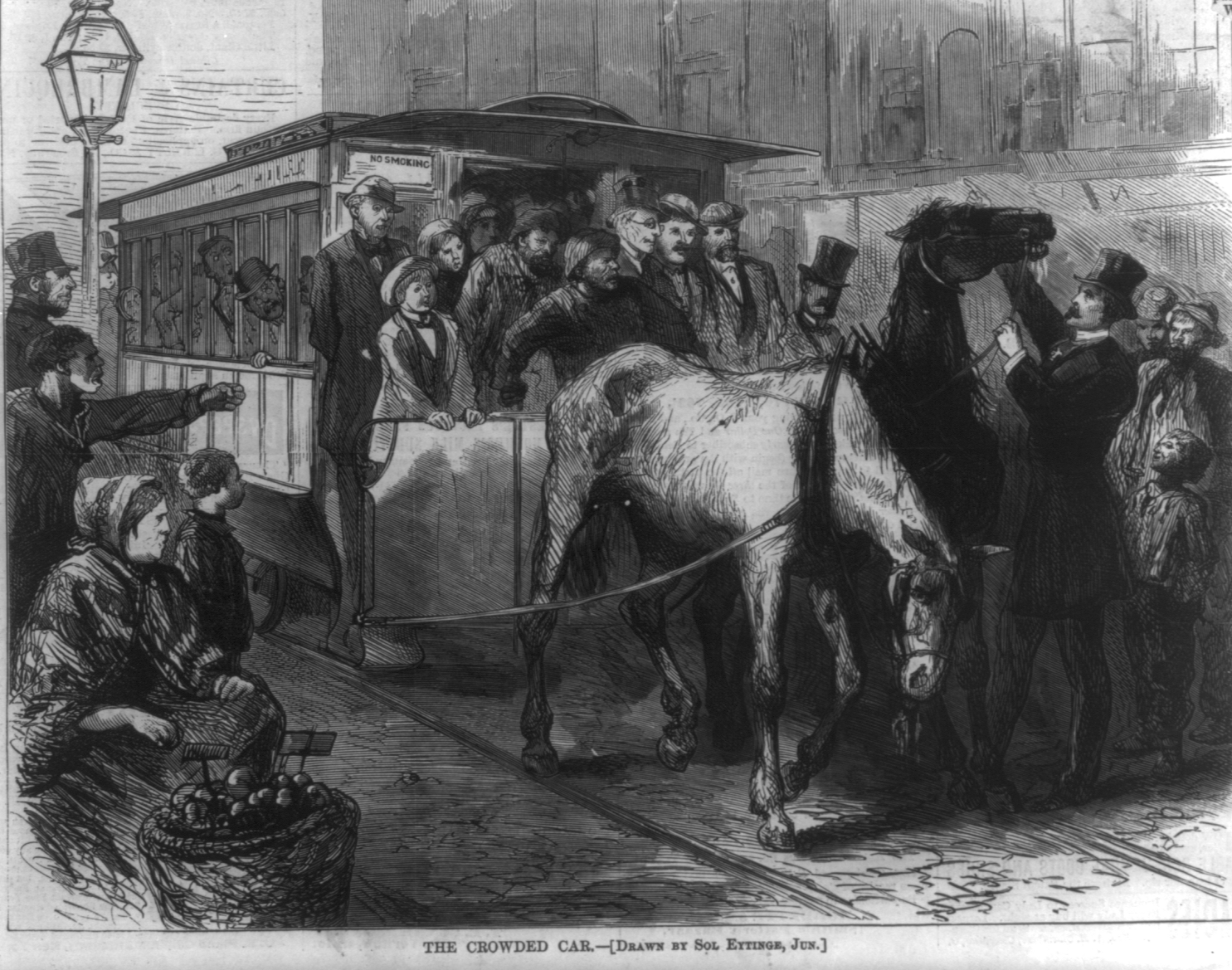
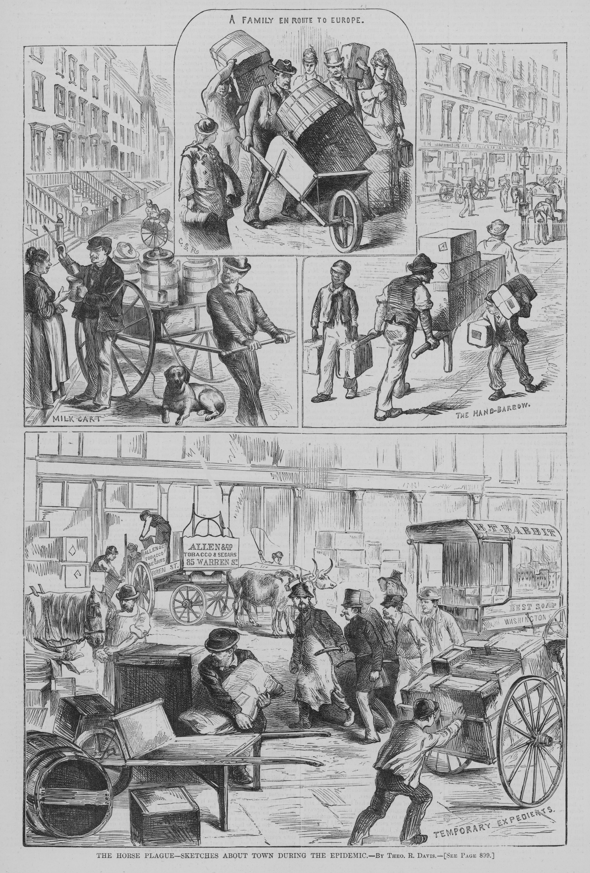
In New York and other northeastern cities, horses provided the lion’s share of short- and medium-distance transportation for passengers and freight. With their horses ill and requiring rest to avoid life-threatening complications, urbanites crowded onto overburdened horse-drawn cars or “hoofed it.” Merchants requisitioned oxen from the countryside to move freight. Enterprising city-dwellers—particularly those laid off because of the Great Horse Flu’s crippling
effects on construction, transportation, and industry—tried to make the best of a bad situation by charging outlandish prices to move loads by handcart and wheelbarrow. Even so, immense quantities of goods piled up on wharves and in warehouses. cargo in their warehouses and along the wharfs.
New York
October 20, 1872

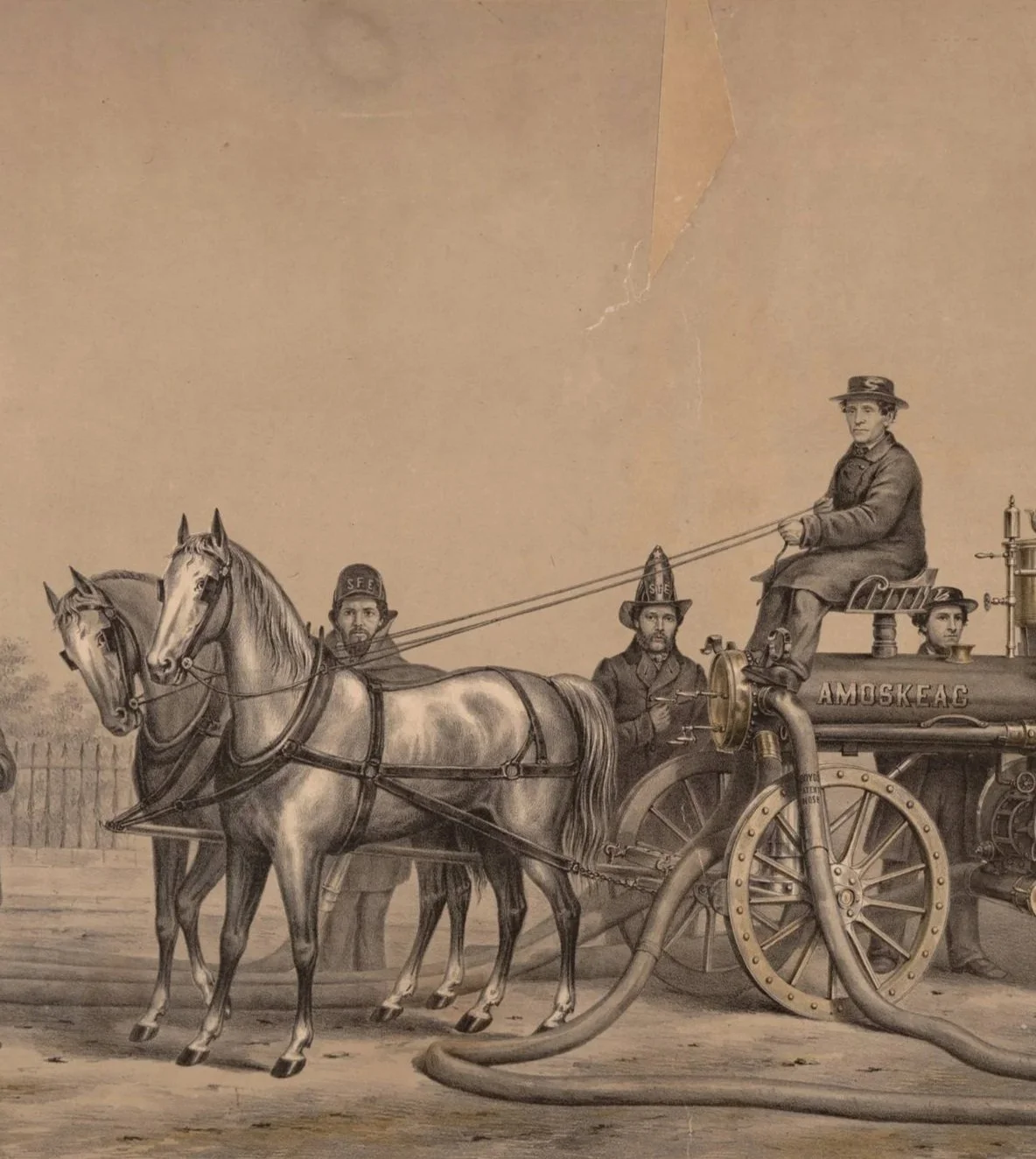
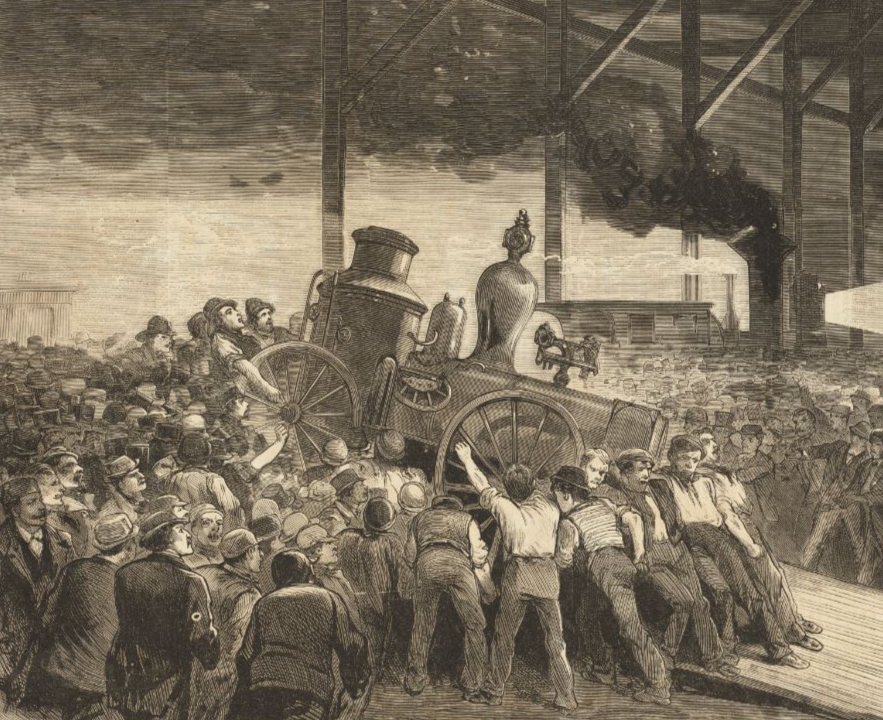
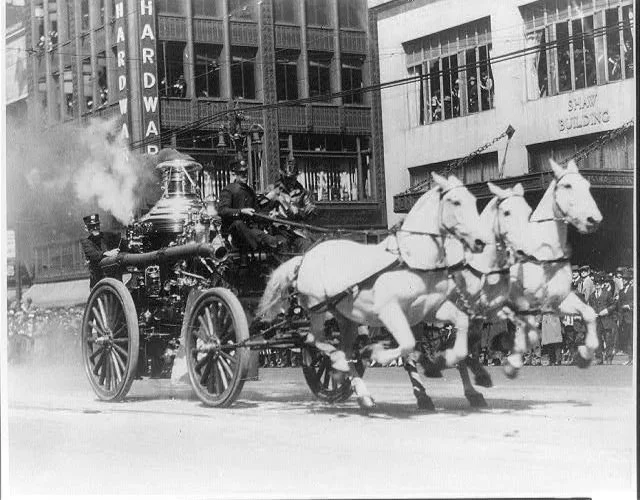
Boston’s fire department, like others throughout North America, relied on specially trained horses who possessed the power to pull heavy coal-burning fire engines at breakneck speed to fire scenes—and the unflappable temperament needed to stay calm as flames erupted, buildings collapsed, and people lost their cool.
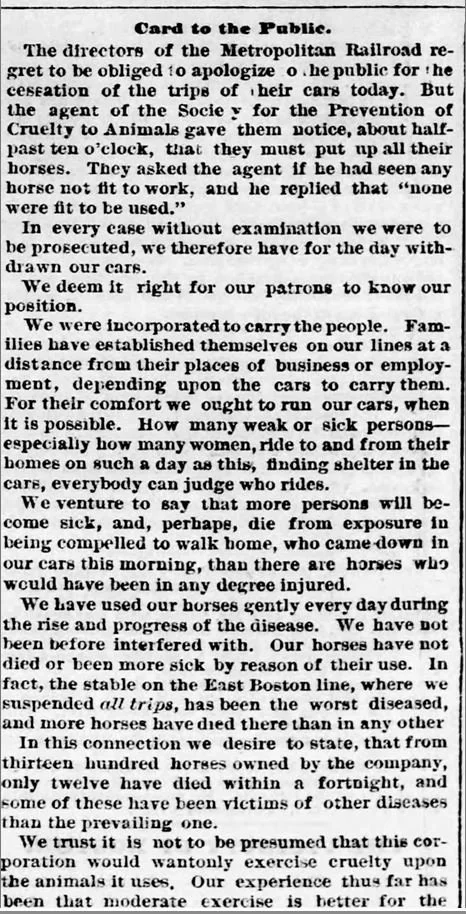
The Great Horse Flu’s arrival thus caused no little concern for Boston fire chief John Damrell and his men. Once nearly all of Boston’s fire horses got sick, Damrell had little choice but to rest these irreplaceable creatures and make contingency plans by which large crowds of citizen volunteers would take up hemp ropes to pull the department’s engines to quash incipient fires before they could grow.
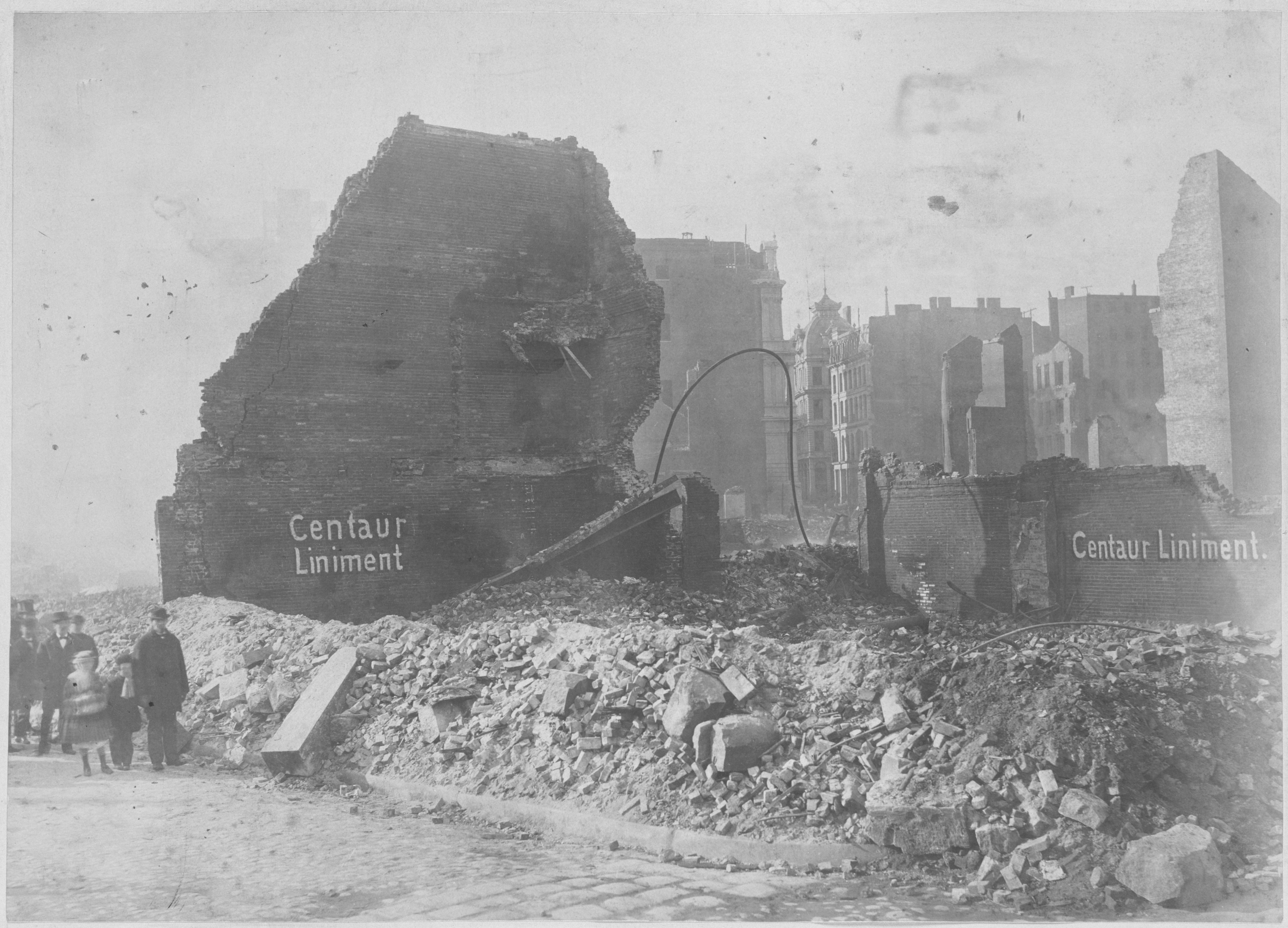
These developments helped set the stage for disaster in a section of downtown Boston formerly known as the South End. Once a bucolic residential district—the nature-loving transcendentalist Ralph Waldo Emerson grew up there, as did many notable Bostonians—the neighborhood had metamorphosed during the mid-1800s into a bustling, densely-packed tangle of warehouses, stores, and factories comprised of stone and brick buildings that soared 80 to 120 feet above street level, topped by fashionable mansard roofs made from wood but painted to look like copper or slate. For years, municipal officials had ignored Chief Damrell’s increasingly urgent pleas to locate more fire houses in the former South End, widen the old, undersized, and rust-clogged pipes that carried water beneath its streets, and replace its antiquated fire hydrants with newer models.
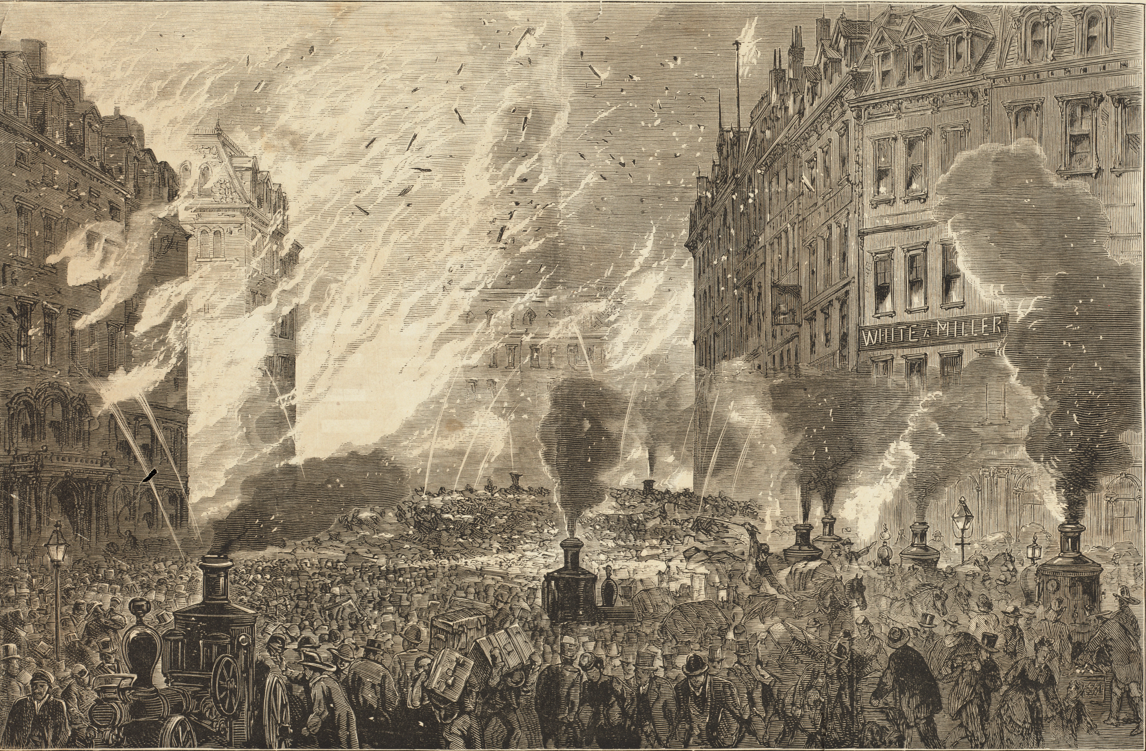
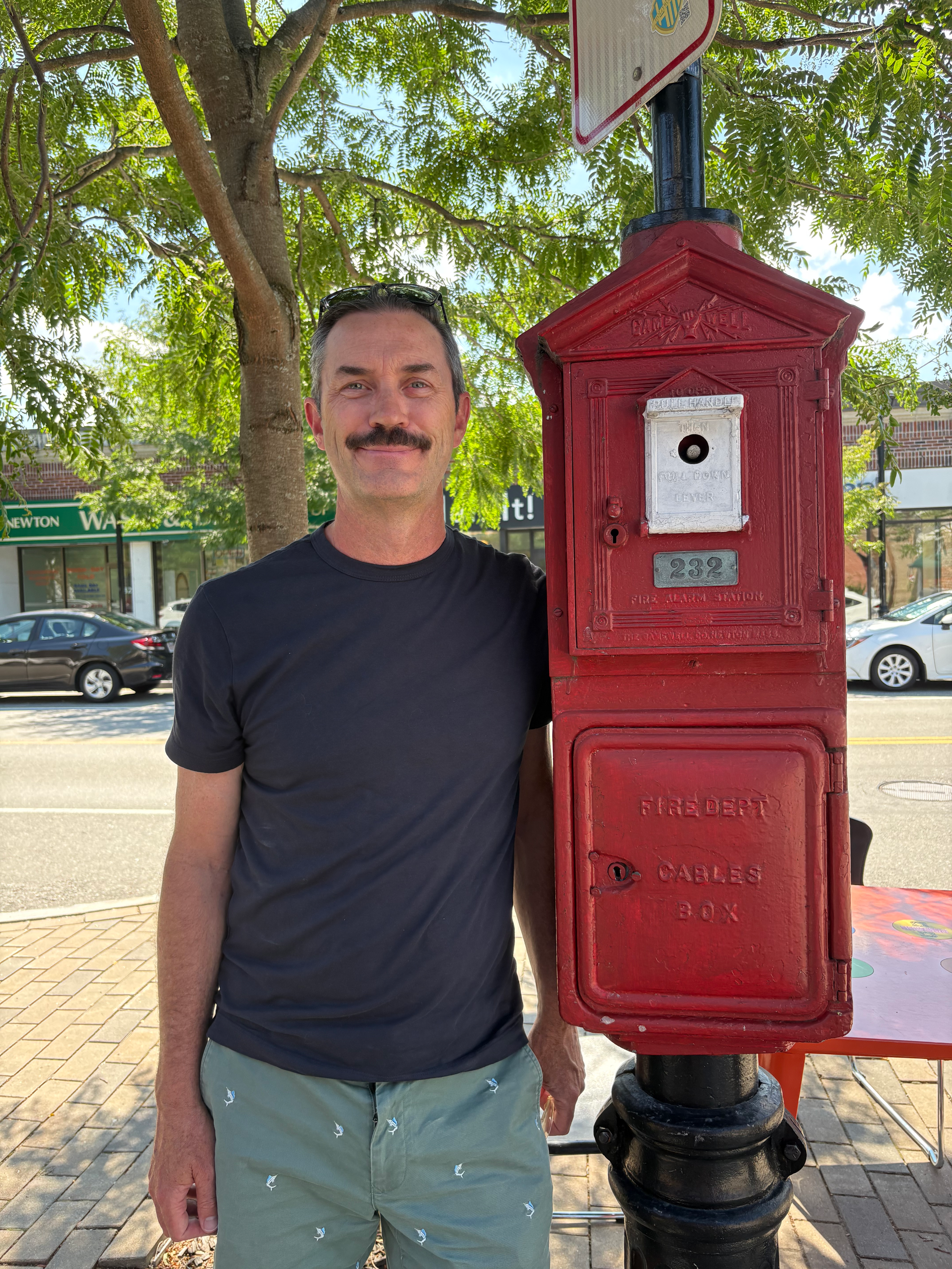
In the early evening of Saturday, November 9, a small fire erupted in a commercial structure at the corner of Summer and Kingston. A policeman who saw the blaze went to the nearest fire alarm box. He thought he had done all that was needed to summon firefighters to the scene. Yet for reasons no one has ever explained, no alarm sounded.
By the time Damrell and his men learned of the blaze, it was already growing into an inferno. Crews of volunteers hastened to drag engines to the scene. They proved up to this task over short distances—but as the fire grew and several additional alarms sounded, firemen from increasingly distant stations faced serious delays because gangs of men and boys lacked fire horses’ strength and stamina.
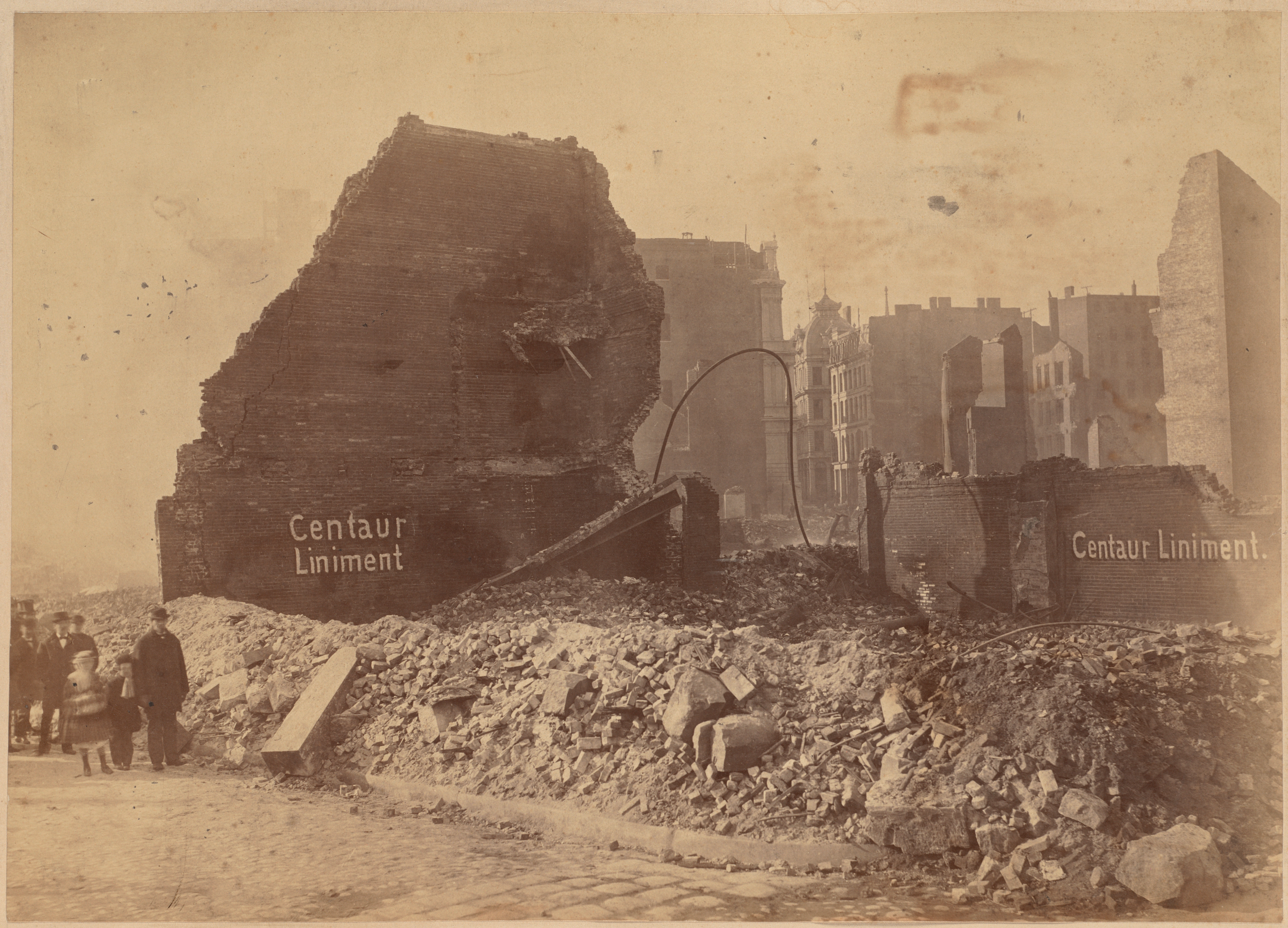
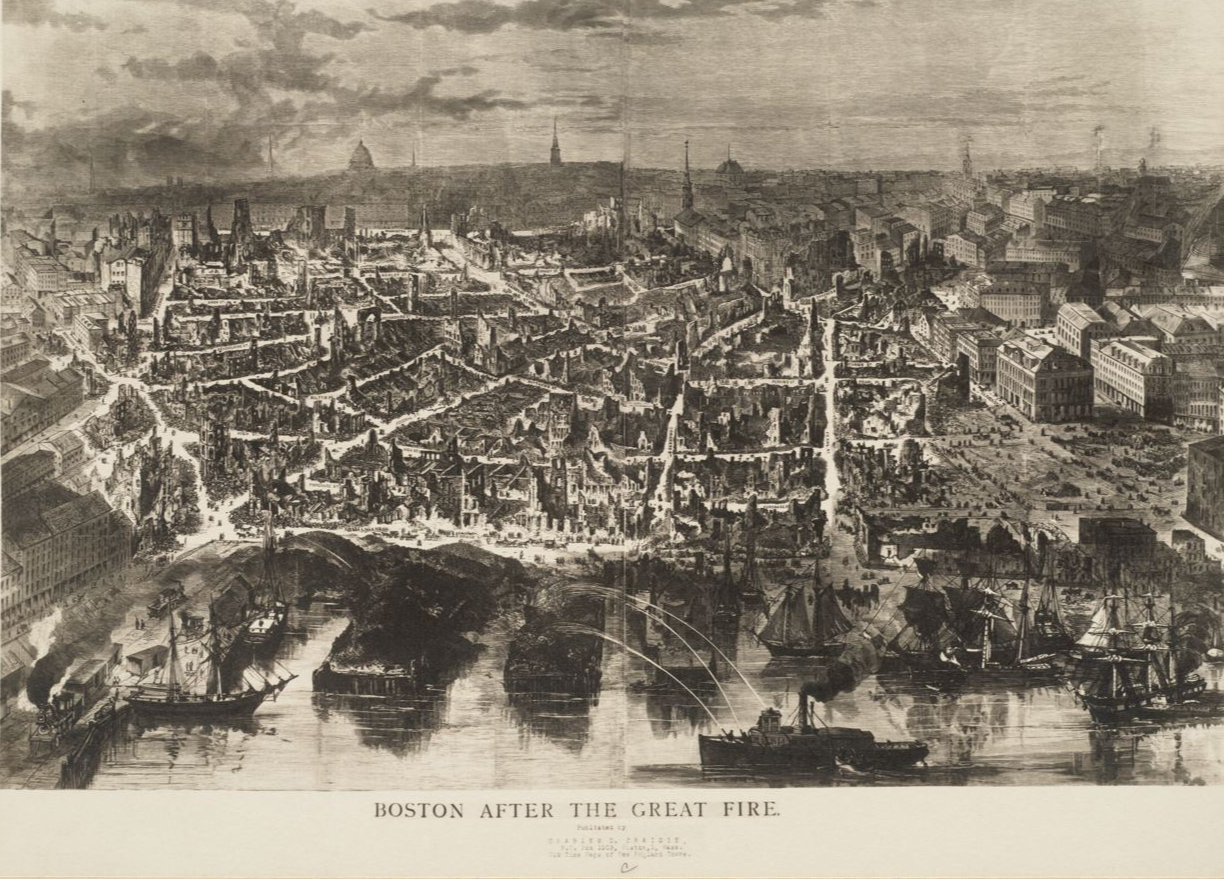
The fire, fueled in no small part by the immense quantities of flammable goods that had accumulated throughout the former South End during the Great Horse Flu’s reign, continued to rage throughout the night and well into the next morning. By the time fire crews from throughout Greater Boston, aided by departments from as far away as Maine and Connecticut, could contain the blaze, flames had reduced 65 acres of the most valuable real estate in the continent to ash and
rubble. Causing upwards of $80 million in losses, the Great Boston Fire ranked as the second costliest urban conflagration in nineteenth-century U.S. history after the Great Chicago Fire of the preceding year. These losses intensified the economic damage the flu epizootic wrought and contributed to the wrenching economic depression known as the Panic of 1873.
Boston
November 9, 1872
Midwest & Southeast
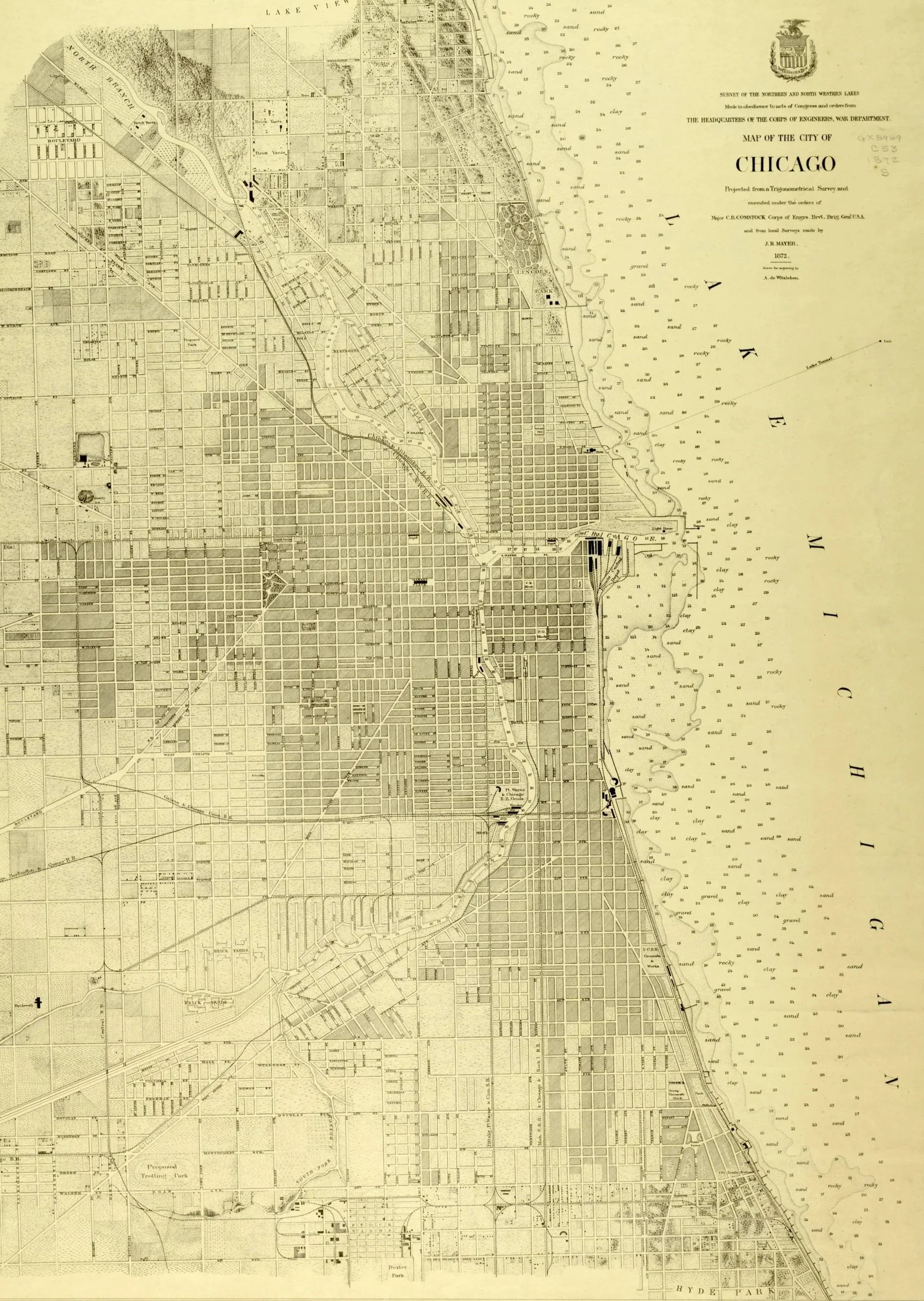
The Great Horse Flu struck towns and cities in the Midwest and Southeast just as hard as it hit metropolitan areas in eastern Canada and the northeastern U.S. Like urban areas, rural regions depended on equines. The outbreak thus paralyzed the countryside alongside the city.
As the epizootic spread south and west, it made economic activities of virtually every sort significantly more difficult, slower, and costlier. From logging regions in the North Woods to the coalfields that stretched from Pennsylvania to Illinois, and from the tobacco farms of the Upper South to the war-torn plantations of the erstwhile Cotton Kingdom, the production and exchange of commodities suffered huge and sudden downturns. Prices surged in cities, towns, and villages as the flow of goods from the countryside dwindled to a trickle.
The resulting losses added to the already heavy direct costs of the epizootic. By killing roughly one to four percent of the horses and mules it sickened, and a much higher percentage of the donkeys it afflicted, the Great Horse Flu wiped out tens of millions of dollars of productive capital. And by jeopardizing the seasonal flows of goods and currency between the southern and midwestern countryside toward northeastern financial centers, the epizootic simultaneously aggravated the nation’s problematically tight money supply.
The Republican Party’s ambitious plans for Reconstruction hinged in no small part on continuing economic prosperity. Together, the Great Boston Fire and the Great Horse Flu jeopardized that prosperity—and, with it, Radical Republicans’ dreams of rebuilding the defeated Confederacy as a biracial democracy.
Fall and Winter 1872
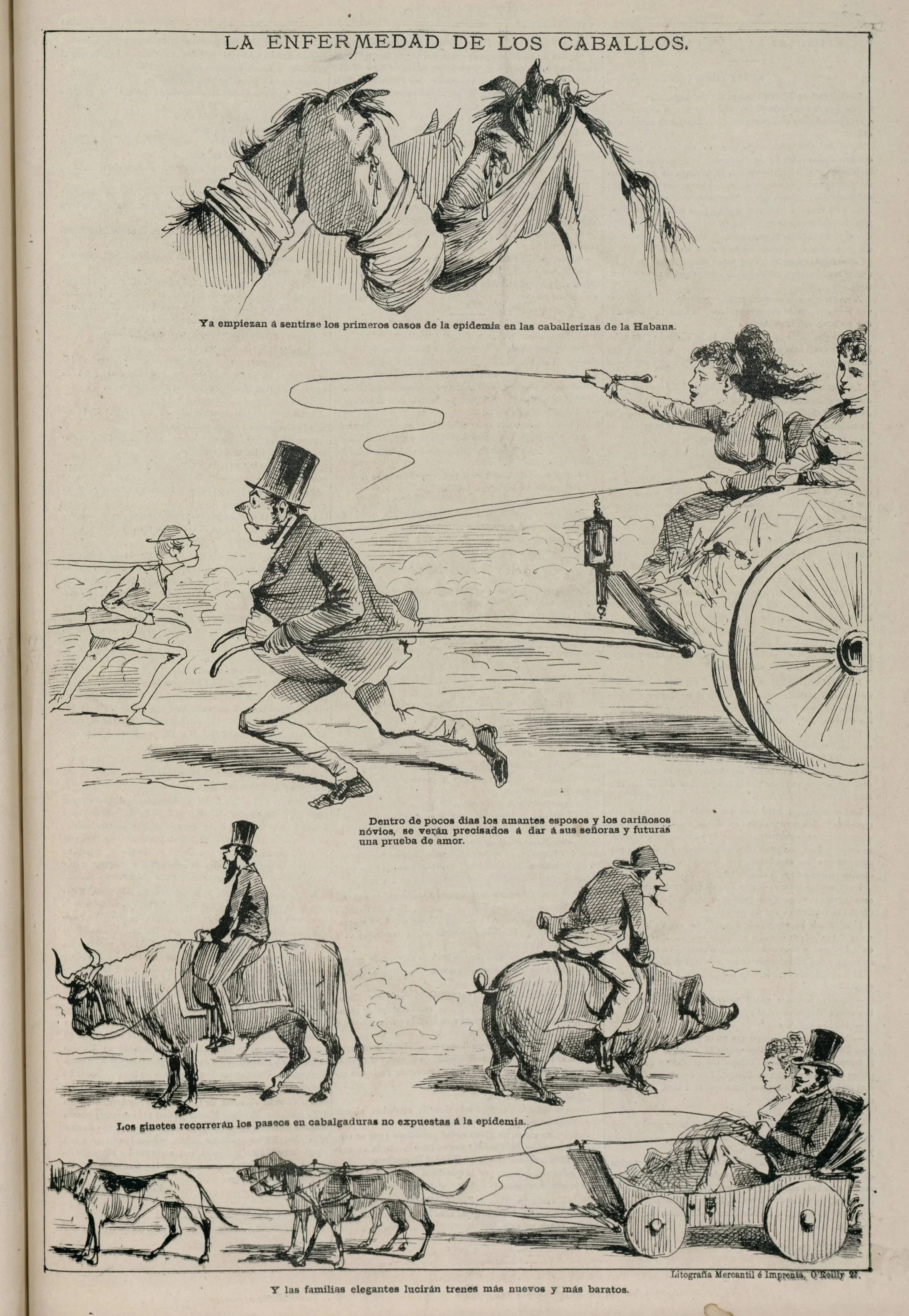
The Great Horse Flu crossed national boundaries as well as species divides. From the U.S., it traipsed across the Straits of Florida to Cuba. In early 1873, the virus—presumably borne in the bodies of equines who swam or walked across the Rio Grande—also started to penetrated also started to penetrate northern Mexico.
While the outbreak spread like dark cloud across nearly every nook and cranny of the eastern U.S. and southeastern Canada, its Latin American travels proved far patchier. This was because equine-powered transportation networks—and, in consequence, equine populations—grew less interconnected and sparser south of the border.
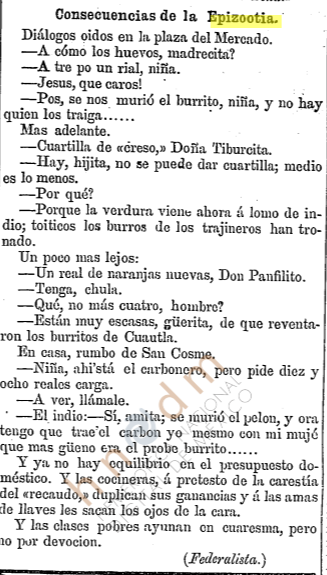
Mexico—and Mexico City most of all—nonetheless suffered severely from the outbreak. The outbreak struck Mexico’s popular classes especially hard because poorer Mexicans often relied heavily burros, who suffered much higher mortality rates from the outbreak than horses or mules. Inhabits of Mexico City also seem to have worried more than their North American counterparts about the health risks that the corpses of equines killed by the epizootic posed to human populations.
Latin America & The Caribbean
Winter 1872 - Spring 1873
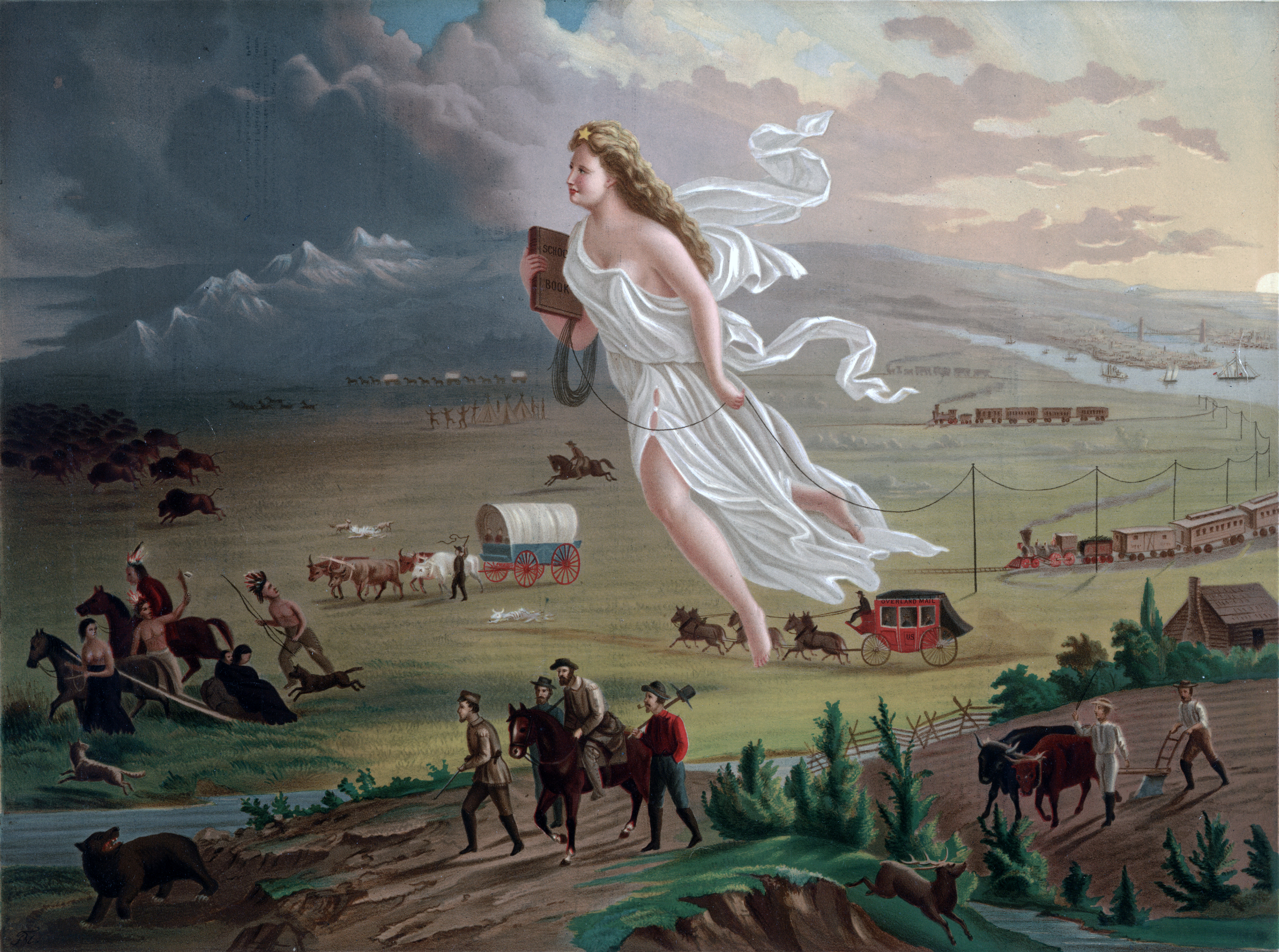
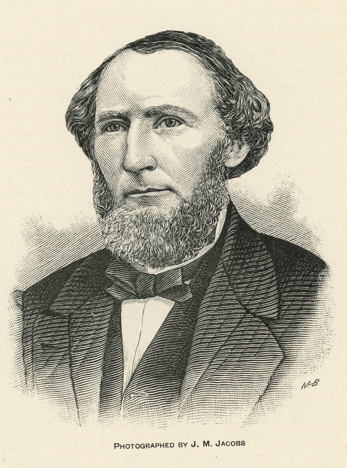
In an effort to tar the Grant Administration and U.S. Army General Philip Sheridan, who had played central roles in the Union defeat of the Confederacy as well as post-war Reconstruction, a Democratic newspaper editor from Auburn, California, Joseph Walkup, published an article falsely alleging the epizootic to have originated among sick ponies stolen by Sheridan’s soldiers after they massacred a Piikani village along the Marias River in Montana Territory in 1870.
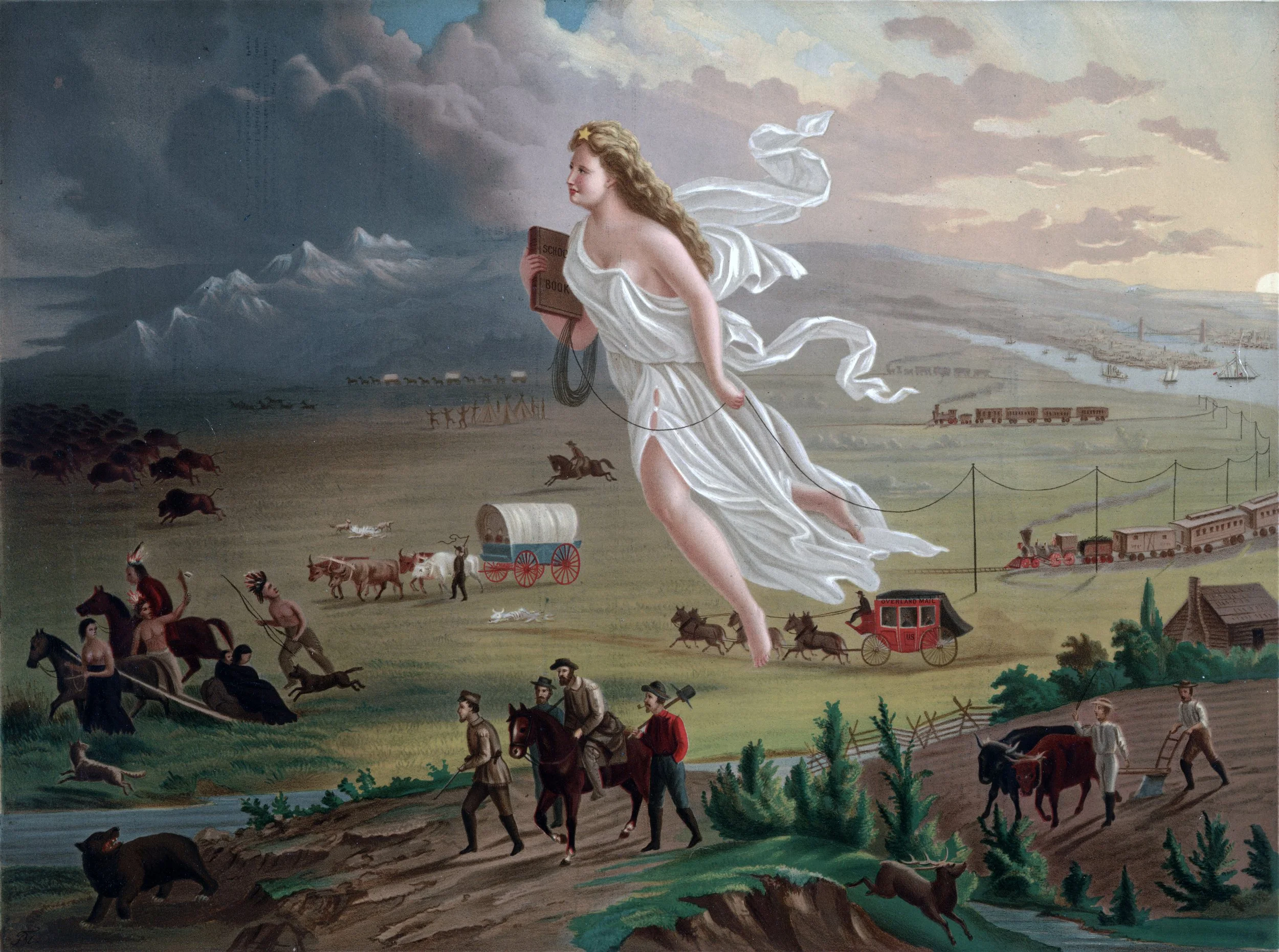
Printed directly after the attack on Sheridan was a second article that vividly described a new and now famous color engraving by John Gast: American Progress. Ironically, the methods of Indigenous displacement and settler expansionism that Gast’s print celebrated actually slowed the epizootic’s spread through Indian Country. Reductions in Native horse herds, the strong preference of Native peoples to keep horses outdoors rather than in stables, and U.S. and Canadian policies that successfully demobilized Indian Nations combined to hamper the Great Horse Flu’s progress.
Meanwhile, the outbreak sped through settlement corridors, where the labors horses and their cousins performed brought them into regular contact with their fellow equines. Horse-powered stagecoach lines, the burros and mules employed by miners, and other vectors of American conquest carried the Great Horse Flu westward. Contrary to the viral lies that Joseph Walkup and other partisans cooked up, the epizootic did not originate with the Marias Massacre—nor did the outbreak’s arrival in Arizona Territory do anything to delay the vicious campaign George Crook and the U.S. Army were prosecuting against Yavapai and Apache peoples. With their horses ailing, cavalrymen dismounted. In search-and-destroy missions that killed several hundred men, women, and children and captured hundreds more, Crook and his men forced their opponents to surrender and comply with federal efforts to free up additional land for settlement by forcing Native peoples onto reservations.
In a final cruel twist, the epizootic reportedly leapt from equines to infect Native peoples, adding to the woes Apache and Yavapai peoples faced from other illnesses, starvation, and forced confinement and surveillance on the Rio Verde Reserve.
Southwest
March 31, 1873
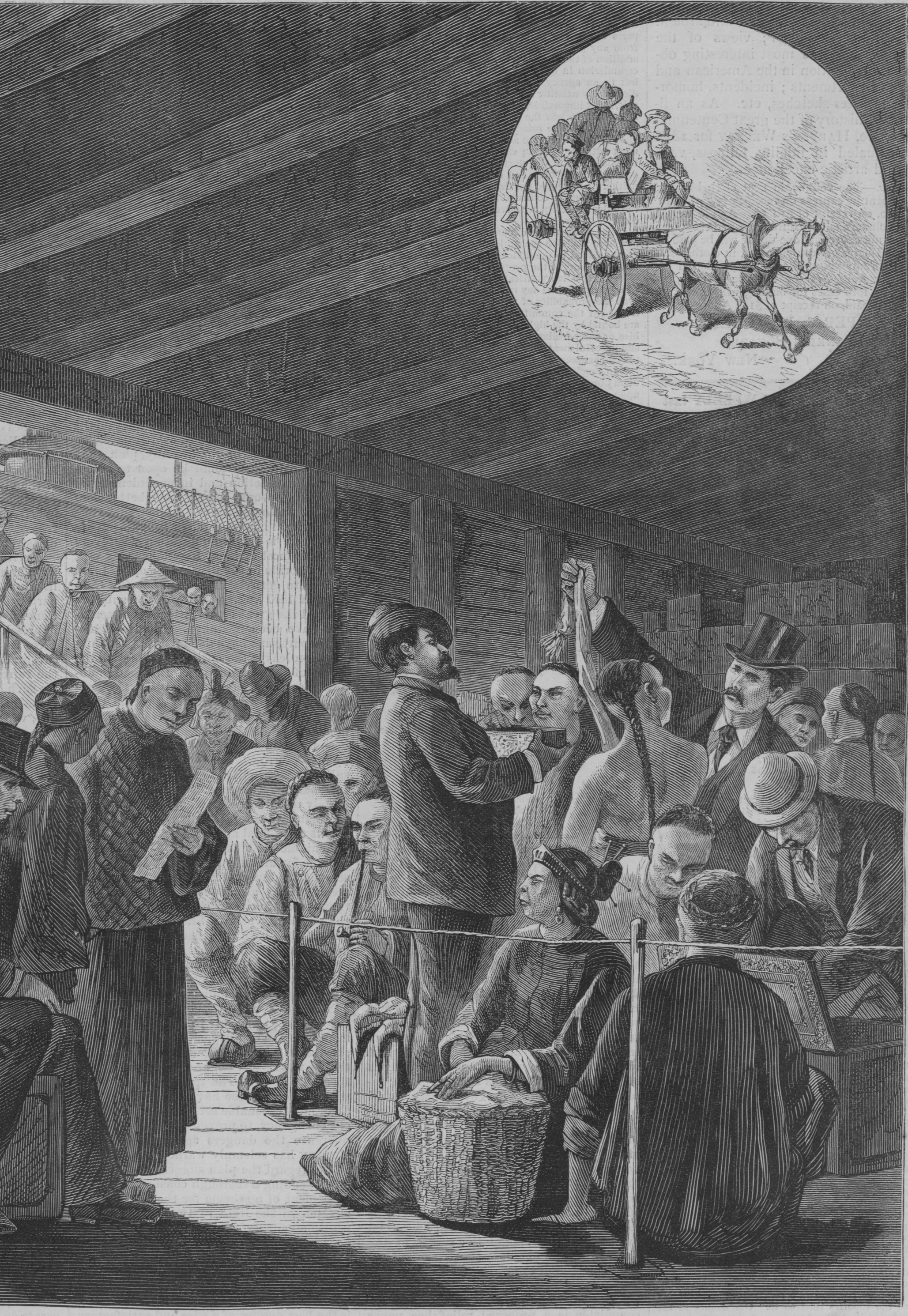
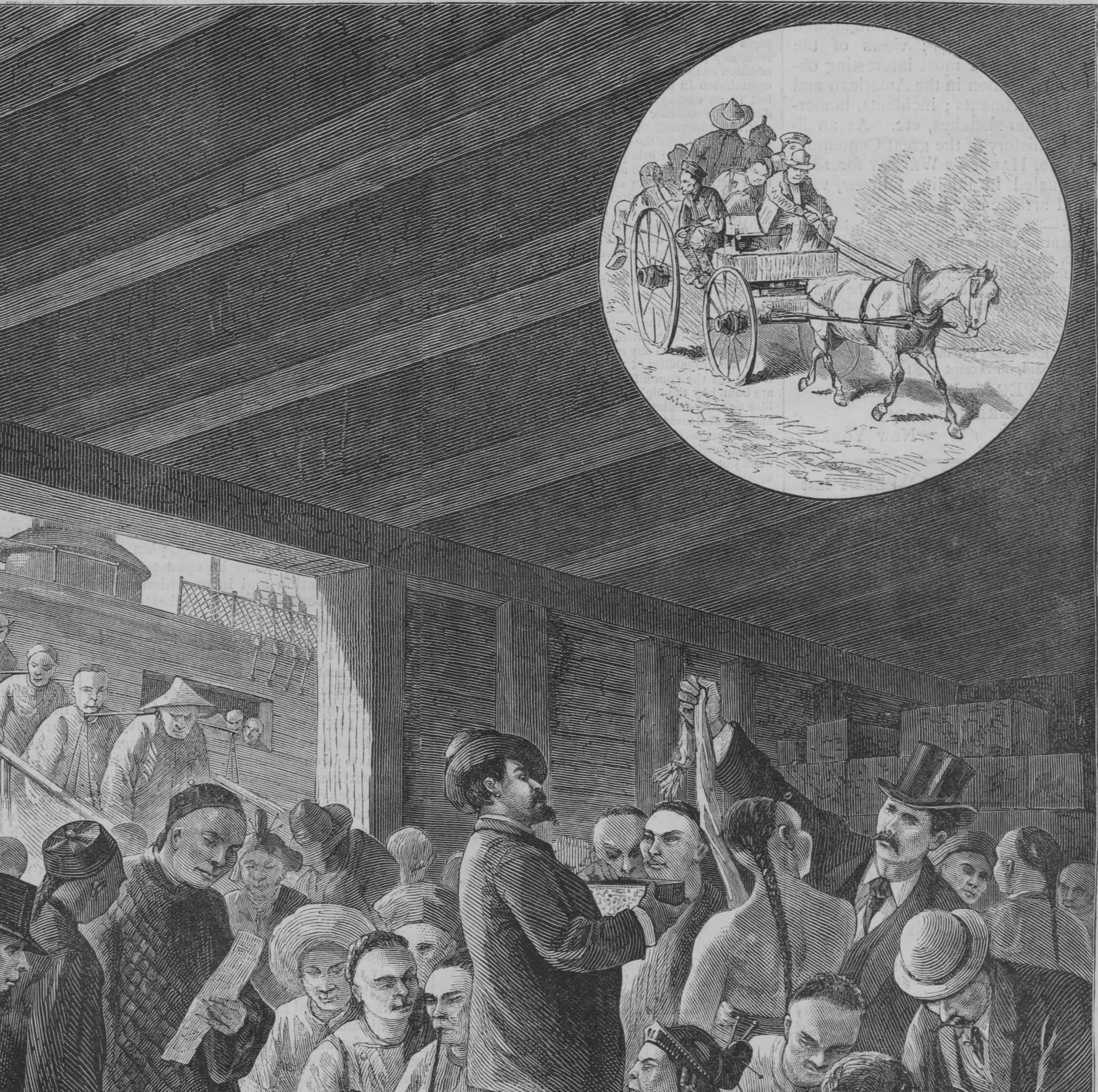
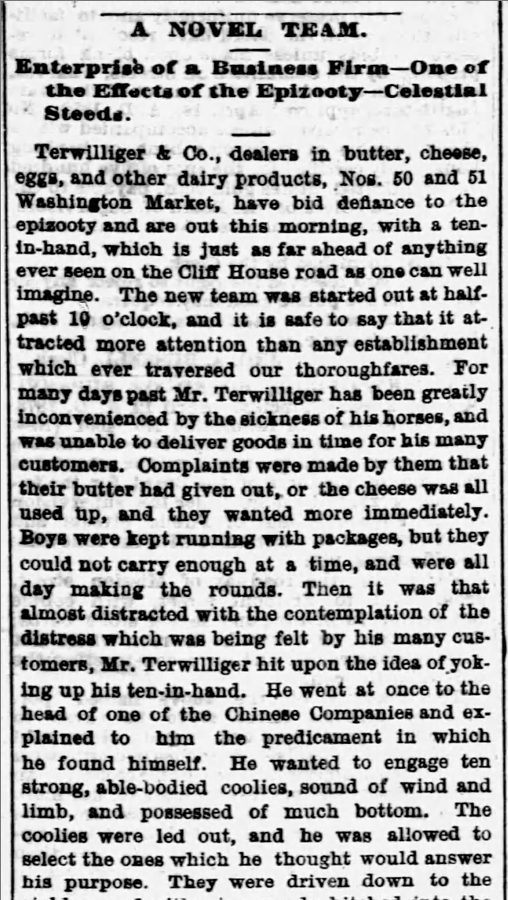
In many cities the epizootic struck, people turned to human labor to replace horsepower, but when the disease finally arrived in San Francisco, it took a particular toll on the city’s Chinese American laborers.
In an effort to harass Chinse Americans and would-be immigrants, laws such as the 1870 Basket Ordinance criminalized the transportation of goods and bags carried by bamboo pole. Despite these attacks on the Chinese-American population, lawmakers, police, and businessmen ignored the ordinance when the Great Horse Flu struck the city and Chinese labor came to replace horsepower on the streets of San Francisco.
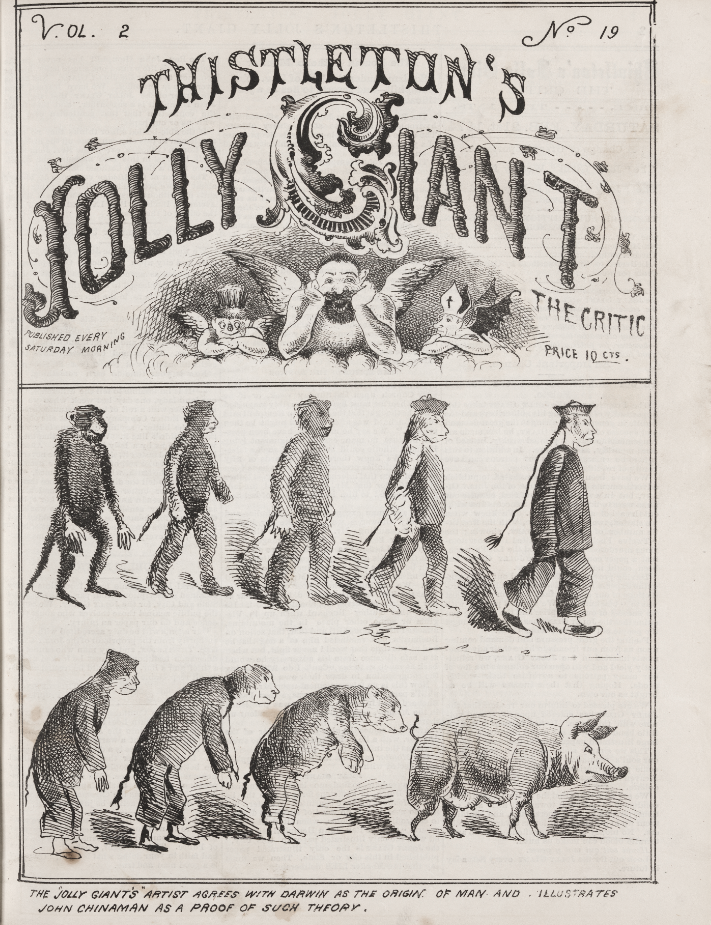
While Chinese-Americans were not the only men to haul cargo and people around the city, magazines—like the virulently anti-Chinese Thistleton’s Jolly Giant—capitalized on stereotypes comparing Chinese to animals to degrade laborers during the epizootic.
Within Chinese communities tensions and debates flared. Some Chinese Americans, like the business owner Ah Quong, hired out Chinese labor to haul drays for white owned businesses, while other leaders of Chinatown
San Francisco
April 18, 1873
This website was made possible through the support of the National Library of Medicine, Award Number 1G13LM013554-01 and the Roaring Fork Fellowship provided by the History Department at the University of Colorado Boulder.
Bibliography
Images and Figures
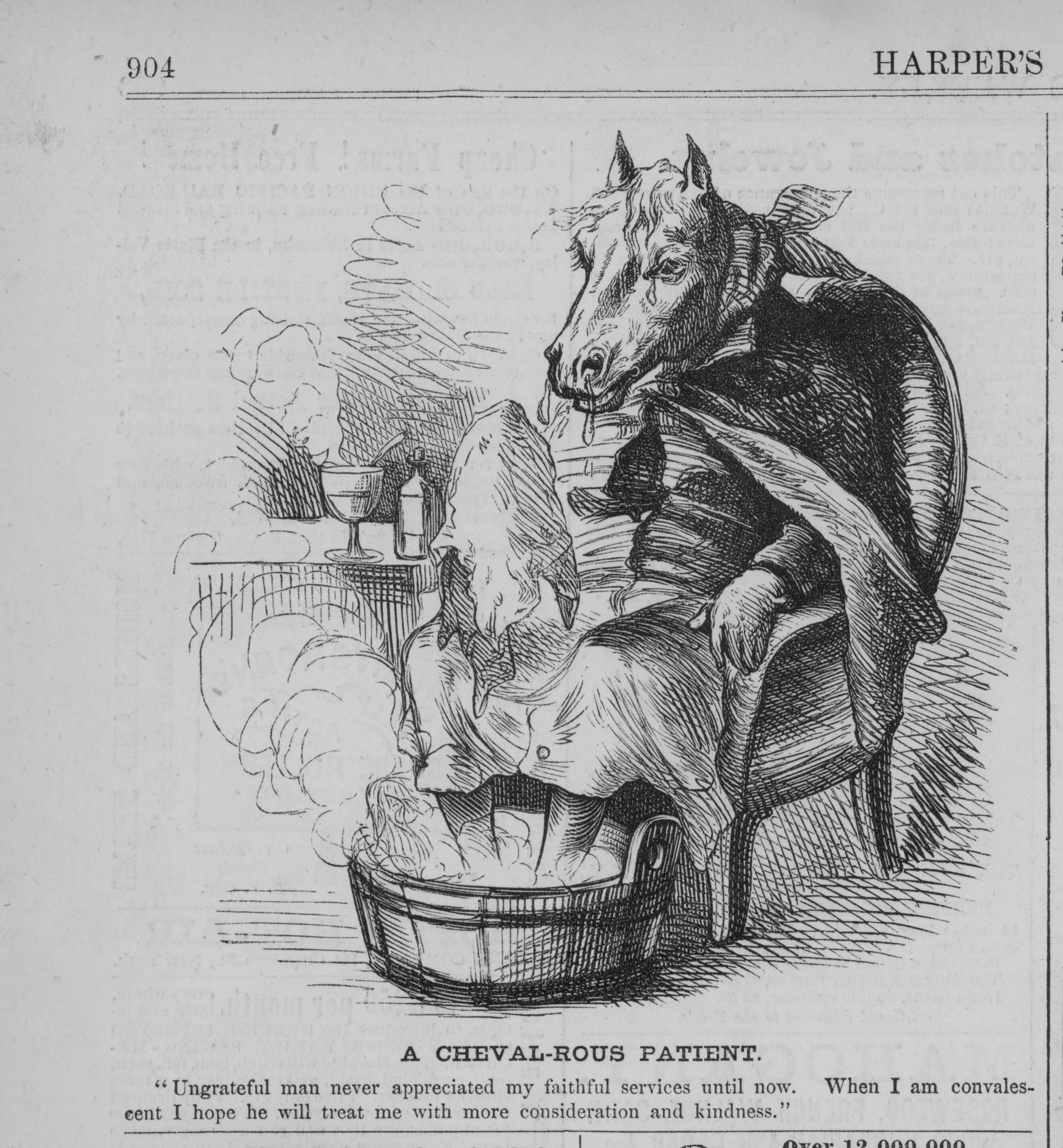
“A Cheval-rous Patient,” Harper’s Weekly, November 16, 1872, 904. Courtesy of University of Colorado Libraries.
Black, James Wallace. Ruins of Centaur Liniment near City Hall, photograph (ca. 1872). Digital Commonwealth, https://ark.digitalcommonwealth.org/ark:/50959/2801pj89x.
Currier & Ives, Broadway, New York: From the Western Union Telegraph Building Looking North (1875). Courtesy of the Library of Congress Prints and Photographs Division, Washington, DC.
Davis, Theodore R. “The Horse Plague.” Harper’s Weekly, November 16, 1872, 900. Courtesy of University of Colorado Libraries.
Eytinge Jr., Sol. “The Crowded Car.” Harper’s Weekly, September 21, 1872, 741, https://www.loc.gov/item/99614207/. Courtesy of the Library of Congress Prints and Photographs Division, Washington, DC.
Frezeny, Paul. “Chinese Immigrants at the San Francisco Custom-House.” Harper’s Weekly, February 3, 1877. Courtesy of University of Colorado Libraries.
Frenzeny, Paul. “Ruined, and Winter at the Door.” Harper’s Weekly, November 23, 1872, 908. Courtesy of HathiTrust, https://babel.hathitrust.org/cgi/pt?id=mdp.39015014703303&seq=865/.
Gast, John and George Crofutt, American Progress (1872-73). Courtesy of the Library of Congress Prints and Photographs Division, Washington, DC.
Harral, Horace. “Sleighing at Harlem, New York,” published in The Survey Graphic (London), February 8, 1873, from author’s collection.
Henderson, J.B. “The Great Fire in Boston.—Arrival of the Special Train from Worcester…,” Frank Leslie’s Illustrated Newspaper, November 23, 1872, 179. Digital Commonwealth, https://ark.digitalcommonwealth.org/ark:/50959/xp68kr439.
Hyde, John H. “The Great Fire in Boston.—View of the Conflagration in Devonshire Street, Looking South Toward Beebe & Co.’s Building on Winthrop Square.” Frank Leslie’s Illustrated Newspaper, November 23, 1872, 178. Digital Commonwealth, https://ark.digitalcommonwealth.org/ark:/50959/xp68kr41r.
“Joseph Walkup,” in [Myron Angel], History of Placer County, California, with Illustrations and Biographical Sketches of Its Prominent Men and Pioneers (Oakland: Thompson & West, 1882), between 176 and 177. Courtesy of Western Historical Collections, Denver Public Library.
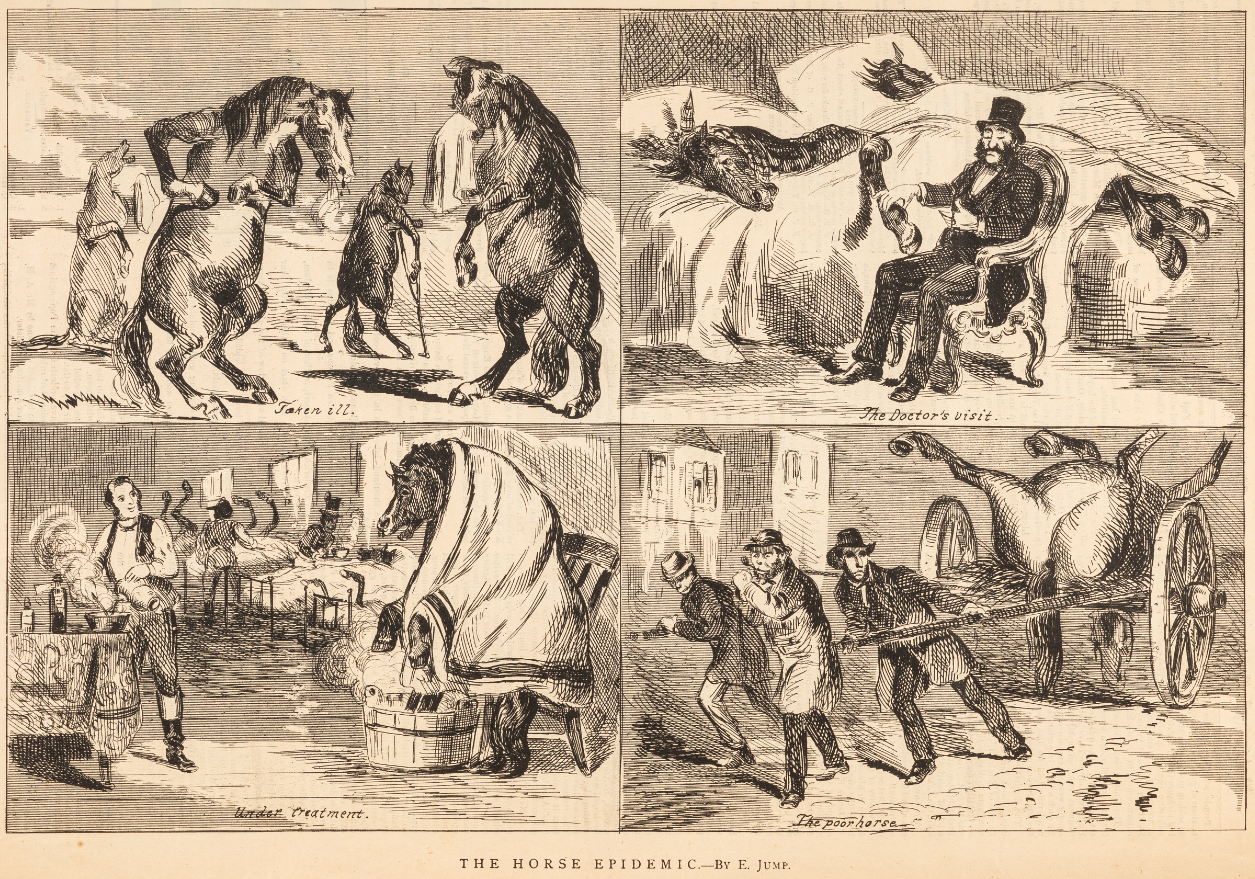
Jump, E. “The Horse Epidemic.” Canadian Illustrated News, October 26, 1872. Courtesy of the American Antiquarian Society.
Keller, George Frederick. Thistleton’s Jolly Giant (The Critic), February 21, 1874, cover. Courtesy of the San Francisco History Center, San Francisco Public Library.
Mayer & Stetfield, Built by the Amoskeag Manufacturing Co., Manchester, NH (ca. 1861), priJLC_FIRE_001497, Jay T. Last Collection of Firefighting Prints and Ephemera, 1826-1907, Huntington Library, San Marino, CA.
“South West Part of York,” in Illustrated Historical Atlas of the County of York and the Township of West Gwillimbury & Town of Bradford in the County of Simcoe, Ont. (Toronto: Miles & Co., 1878). Courtesy of Toronto Public Library.
Witzleben, Arthur de. “Chicago, Illinois 1872.” 1872.
Newspapers
“A Horseless City,” Courier-Journal, October 29, 1872.
“A Novel Team,” The San Francisco Examiner, April 26, 1873.
“Card to the Public,” Boston Evening Transcript, November 7, 1872.
“Deaths of Famous Horses From the Epidemic.” The Kansas Chief, December 5, 1872.
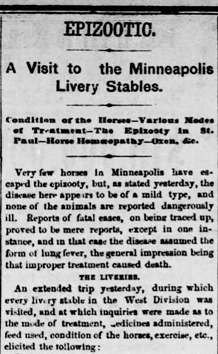
“Epizootic. A Visit to the Minneapolis Livery Stables.” Star Tribune, December 4, 1872.
“Epizootic!” Nashville Union and American, November 21, 1872.
“Equine Epidemic.” Hartford Courant, October 24, 1872.
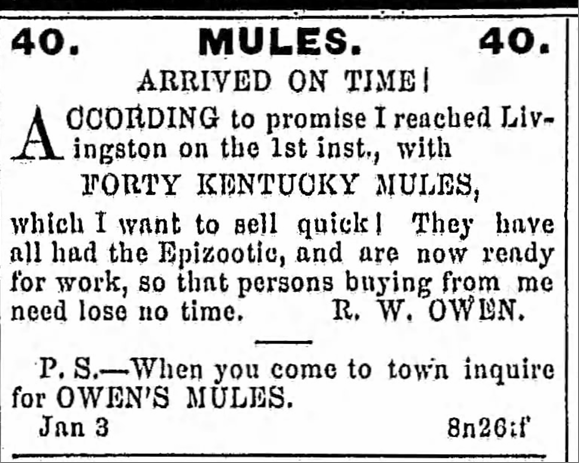
“Mules.” Livingston Journal, January 20, 1873.
“Consecuencias de la Epizootia.” La Bandera de Juarez, April 9, 1873.
“Look to Your Horses.” Chicago Daily Tribune, October 24, 1872.
“Our Patient Toilers.” Philadelphia Inquirer, November 6, 1872.
“San Francisco - The Indians and the Epizootic.” Milwaukee Sentinel, April 5, 1873.
“The Epizootic,” New York Herald, October 23, 1872.
“The Horse Disease.” The Times-Picayune, November 15, 1872.
“The Horses.” Chicago Tribune, November 15, 1872.
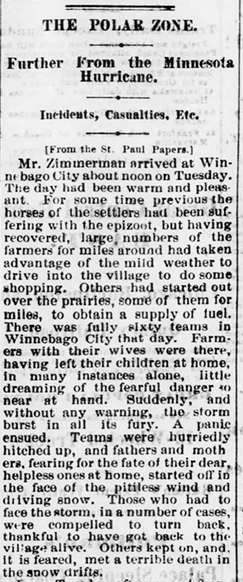
“The Polar Zone.” Atchison Daily Patriot, January 20, 1873.
“The Tyhoid Laryngite,” New York Daily Herald, October 26, 1872.
Maps and Animation
Maps and animation of the epizootic’s spread courtesy of PhD candidate Maggie McNulty and Dr. Kerri Keller.
Website design by Dillon Otto.
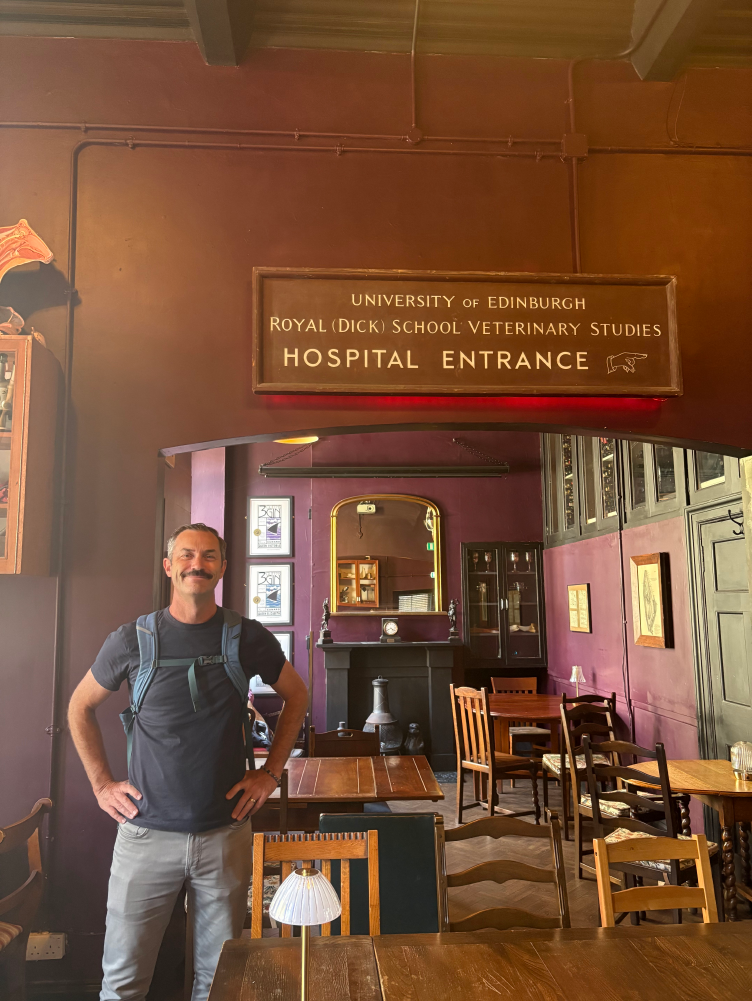
Several of the leading veterinary surgeons to study and treat the Great Horse Flu trained here, at the University of Edinburgh’s Royal Dick Veterinary College, part of which is now a pub.